


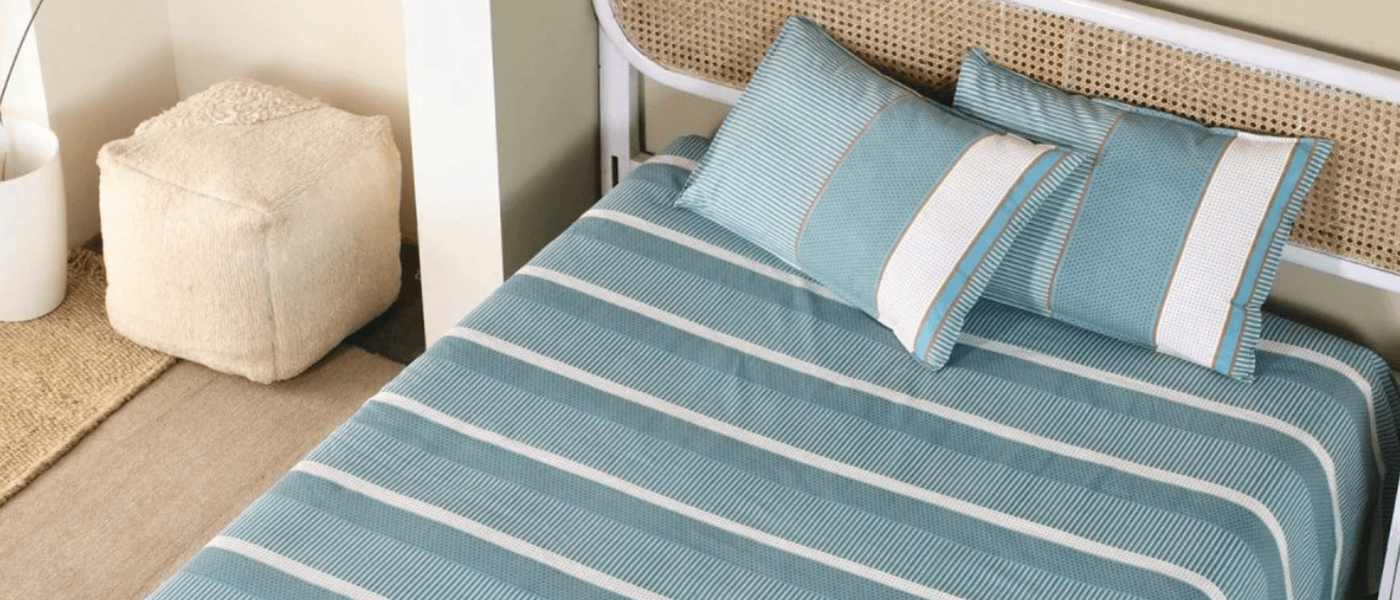


Difference Between Microfiber and Cotton Bed Sheets: Which One Should You Buy?
• By Richa
• 2025-11-24
• 9 mins read
Microfiber sheets are made from man-made fibers. They’ve become quite common because they feel smooth, last for years, and don’t ask for much effort when it comes to washing or drying. You can toss them in the machine, and they come out almost wrinkle-free. For someone who wants something easy and budget-friendly, microfiber usually does the job well.
Cotton feels different altogether. It is a natural fabric that lets your skin breathe and feels soft in a way that never gets old. If you tend to get warm while sleeping or find man-made fabrics a bit uncomfortable, cotton can make a noticeable difference. It helps by keeping your bed cool and airy; even when the nights feel heavy and warm.
At the end, it is all about personal preference - the simple upkeep and neat look of microfiber, or the gentle, breathable comfort that only cotton can give.
Let’s take a moment to see how the two fabrics differ so you can choose the one that matches your way of sleeping.
Microfiber
Microfiber bed sheets are constructed of very thin synthetic threads, like polyester, that are densely woven together. Many people say microfiber sheets have a feel similar to satin - smooth, soft, and just a bit velvety when you touch them.
Microfiber is light weight yet strong, some have a brushed finish which adds a gentle and cozy layer for comfort, which makes bedtime feel a little more calm.
Pros of Microfiber:
- Soft and smooth: Microfiber sheets usually have a velvety, silky feel. The ultra-fine fibers create a smooth surface that many people find very cozy to sleep on.
- Durable: Made of finely woven synthetic threads, microfiber is quite tough. These sheets resist shrinking and hold up well through many wash cycles. Unlike some cotton, they won't easily tear or thin out with frequent use.
- Low-maintenance: Microfiber is very wrinkle-resistant and easy to care for. You can toss these sheets in the washer and dryer, and they'll come out relatively wrinkle-free and dry faster than cotton. No ironing needed to keep them looking neat.
- Affordable: Generally, microfiber sheets cost less than comparable cotton sheets. If you're on a budget or need multiple sets of sheets, microfiber offers a wallet-friendly way to get soft bedding without breaking the bank.
Cons of Microfiber:
- Less breathable: Microfiber has a tight woven structure, so that air doesn't pass much through it. Also, it tends to trap your body heat, which makes a great option for cooler nights or if you often feel cold. Though it is not a best choice if your body temperature gets warm easily during summer.
- Synthetic material: Microfiber is a man-made material (essentially polyester), so it lacks the natural appeal of cotton. Some people just like the feel of natural fibers on their skin. Microfiber, on the other hand, can sometimes build up static, which makes the sheets cling or attract dust and pet hair, especially in dry weather.
- Stain-prone: Microfiber is very absorbent, so it can hold onto stains or odors more than you might expect. For example, body oils, lotions, or spills might cling to the fibers, meaning light-colored microfiber sheets could develop visible spots or slight odors over time if not washed thoroughly. If you enjoy midnight snacks in bed or worry about sweat stains, you might find that light-colored microfiber sheets show those spots more than cotton would.
Cotton
Cotton bed sheets have been a beloved choice for ages – and for good reason. As cotton is a natural fiber which is soft, breathable and comfortable to sleep on. All cotton sheets share these qualities, and a nice bonus is that cotton tends to get softer with each wash.
In other words, a good set of cotton sheets gets softer with each wash and use. The fabric gradually adjusts to your skin, building that familiar and comforting feel which makes you look for your bed at the end of day.
Pros of Cotton:
- Breathable Fabric: Natural cotton fibers let the air pass through easily, that’s why the sheet feels cool and fresh. People who get too warm at night usually pick cotton sheets over other fabric as they don't retain heat. It makes you feel better by letting the heat spread out instead than staying in one spot.
- Hypoallergenic: As a natural fiber, cotton is gentle on skin and unlikely to trigger allergies or irritation. If you have delicate skin or are allergic to dust, this is a safe choice. They don't hold on to dust mites as much as other synthetic materials can, and you can wash them at high temperatures to get rid of allergens when you need to.
- Comfortable: There's a reason cotton is synonymous with comfort. Cotton sheets feel soft to the touch and actually become even softer with each wash. The fabric has a cozy, inviting feel. A lot of people say that sleeping on cotton feels like "snuggling a cloud" as it feels so soft and nice.
Cons of Cotton:
- Wrinkles easily: One little negative of natural cotton is that it tends to get wrinkled. If you take your cotton sheets out of the dryer and put them immediately on the bed, you could see some wrinkles. Some individuals don't mind a few creases in their cotton sheets because they can mean that the sheets are made of pure cotton and are soft. But if you enjoy the look of completely smooth sheets like those in a hotel, you might have to iron them or at least smooth them out more often. Microfiber is naturally more resistant to wrinkles than cotton.
- Can wear out over time: Cotton fibers can break down a bit with years of use, especially if the sheets are lower quality or not cared for properly. High-quality cotton sheets can last for many years, but an often-used budget cotton sheet might thin out or fray after long-term use. Microfiber, being synthetic, doesn't break down as easily, so it can sometimes stay intact longer under heavy use. So, a budget cotton sheet might show its age sooner than a budget microfiber sheet. (However, it's worth noting that premium cotton, like Egyptian cotton with a high thread count, is very durable and can last a long time, making it a good investment.)
- Requires a bit more care: Cotton is simple to wash and look after, but you shouldn’t use too much heat. If you wash or dry pure cotton in really hot water, it might shrink a bit and lose its proper fit. It’s better to use normal or slightly warm water and dry it on medium heat, so it keeps its shape and lasts longer. That's all you need to do to take care of cotton. Remember that it can need a quick ironing to look brand new.
Even with a few drawbacks, cotton is still widely liked for bed sheets because it’s soft, comfy, gentle on your skin, and lets the air pass through easily. It's the classic go-to for a good night's sleep, and with a bit of care, a quality cotton sheet set can last for years.
For example, the Pure Cotton Bedsheet for Double Bed with 2 Pillow Covers (Textured Design, Handprinted, Ivory and Navy Blue, Marigold Collection) and the Cotton Bedsheet in Taupe and Off-White with a matching Pillow Cover (Marigold Collection) are beautiful picks that bring together breathable comfort and simple, elegant style.
With cotton, you can truly enjoy the best of both worlds.
How to Choose Between Microfiber and Cotton Fabric?
Both microfiber and cotton have their own good sides, so it really depends on what feels better for you when you sleep. Here are a few simple points that might help you decide which one fits you best.
Go for microfiber if you want sheets that are easy to maintain, light on the budget, and don’t wrinkle much. If you usually feel cold at night or during winter, microfiber will help keep you warmer since it holds the heat in.
If you like natural fabrics and want something that feels light and airy on your skin, choose cotton. This is a great choice if you sleep hot or live in a hot area because it keeps you cool all night. Cotton is particularly good for persons with allergies or sensitive skin because it is soft, mild, and easy on the skin. And if you love that classic soft feel that gets better with each wash, cotton will be very satisfying (as long as you don't mind giving it a bit of extra care).
Others keep both types on hand, with microfiber sets for when they want something nice and easy, and cotton sets for when they want the most comfort and coolness.
Now you know the basics, let's talk about some questions that people often have about cotton and microfiber bed sheets.



Pure Cotton Bed sheet with Pillow Cover in Rust and Off White | Single | Queen and King Sizes | Marigold Collection - Rust and Off white / Queen Size / Pure Cotton

Pure Cotton Bedsheet with 2 Pillow Covers Handprinted in Jaipuri Design of Teal Green and Off White

Pure Cotton Bedsheet for Double bed with 2 Pillow Covers | Fern Green & Off White |Handprinted | Marigold Collection

Rust & Off White Cotton Bedsheet with Pillow Cover | Marigold Collection - 90 x 108 Inches / Pure Cotton / Rust & Off White

Cotton Bed sheet with Pillow Cover in Mustard and Off White | Queen Size 90 x 108 Inches| Pure Cotton
You May also Like
Benefits of Choosing Eco-Friendly Home Decor
• By Anamika
• 2026-01-07
Why choose Handmade Products over Mass-Produced Products
• By Anamika
• 2026-01-07

Lippan Art vs Other Indian Wall Arts: Key Differences & Which Is Best for Your Home
• By Richa Kumari
• 2026-01-02
How to Choose the Right Lippan Art Size for Your Wall | Expert Sizing Guide
• By Richa Kumari
• 2026-01-02
How to Select the Right Bedsheet for Summer, Winter & Monsoon
• By Richa Kumari
• 2026-01-02
Frequently Asked Questions
1: Is cotton or microfiber better for skin?
Most people consider cotton gentler on the skin. It's a breathable natural fiber, so it doesn't trap heat or sweat – meaning less chance of irritation or breakouts if you have sensitive skin. Microfiber is also soft, but since it's synthetic and less breathable, it might make you a bit warmer or sweatier. This also makes it a problem for people with sensitive skin, or even children. If keeping your skin cool and irritation-free is your goal, cotton usually comes out on top.
2: Is it good to use microfiber bedsheets?
Yes, microfiber sheets are perfectly okay to use – many people love them. They're very soft, durable, and easy to wash, which makes them great for everyday bedding. If you want a warm, cozy bed or you're on a budget, microfiber is a good choice. The only real downside is they don't breathe as well as cotton, so if you tend to sleep hot or sweat at night, you might prefer a more breathable fabric. Also, microfiber is synthetic (polyester), which matters to some eco-conscious folks.
3: Do hotels use microfiber or cotton sheets?
A: Most hotels use cotton bedding, not microfiber. Luxury and mid-range hotels choose cotton (typically Egyptian cotton) since it's durable, breathable, and gives guests a fresh, crisp feel. For hotel hygiene, cotton bedding can withstand regular hot washing and bleaching. Luxury hotels rarely have microfiber sheets.
 Free DeliveryAcross India
 100%Hand-crafted
 COD Available
 Easy Returns