


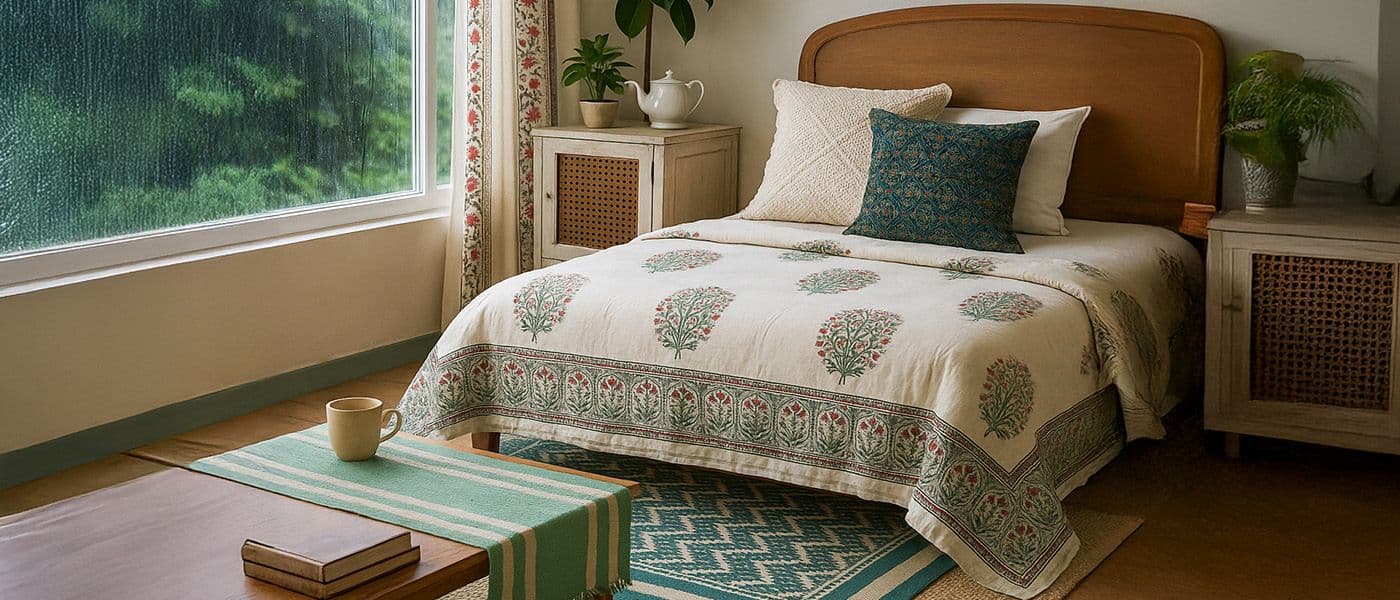


Understanding Different Bed Sheet Materials: Fabric Choices for Indian Homes
• By Richa
• 2025-11-21
• 9 mins read
There’s a small ritual most of us share at the end of the day - that quiet moment when the bedsheet is pulled smooth, corners tucked in, and the room feels suddenly at peace. The touch of that fabric against your hand decides how the night will go. Some sheets cool you down, some cocoon you, and some remind you of home.
In design guides, fabric and weave are treated like data points. But in India, they’re emotional. Our bedsheets don’t just match décor; they survive summers that melt, monsoons that linger, and winters that barely arrive. The right one isn’t only about thread count - it’s about rhythm, breath, and a little bit of memory.
Why Fabric Matters More Than You Realise
A bedsheet is more than a layer of cloth. It’s climate control, skincare, and a reflection of how you live. A crisp cotton one keeps you comfortable even when the ceiling fan barely helps in April. A soft sateen feels warm under the AC when it’s drizzling outside.
In Indian homes, sheets endure a different kind of life - weekly washes, sun-drying, sometimes even a touch of starch for that clean crackle. Choosing the right material isn’t a luxury; it’s practicality refined by experience. You want something that breathes, forgives, and grows better with every wash.
The Main Fabrics and How They Feel
Cotton Varieties
There’s nothing more familiar than cotton. It’s what generations have trusted — the fabric that soaks up sweat in June and dries on terrace lines under the afternoon sun. You can almost hear the breeze move through it. Cotton softens over time, the way habits do. It takes colour beautifully and carries print like a story.
Egyptian Cotton
The gold standard of cotton silky, strong, and luxuriously smooth. Its extra-long fibres make the weave tighter and more lustrous. Best for: Premium bedrooms and warm climates Why it works: Long-lasting, ultra-soft, and naturally glossy
Pima Cotton
A close cousin of Egyptian cotton with the same softness but a slightly crisper touch. It’s elegance without excess. Best for: Everyday luxury seekers Why it works: Breathable, durable, and resistant to pilling
Upland Cotton
The most widely used cotton simple, honest, and reliable. It’s what most of our favourite everyday sheets are made from. Best for: Daily use and family homes Why it works: Affordable, sturdy, and easy to care for
Flannel Cotton
For nights that need warmth and comfort. Brushed on both sides, it feels like sleeping inside your favourite winter shirt. Best for: Cold or hilly regions Why it works: Soft, cozy, and naturally insulating
Jersey Cotton
Casual, stretchy, and snug like your most-loved T-shirt turned into a sheet. It moves with you and never feels stiff. Best for: Cozy sleepers and relaxed interiors Why it works: Wrinkle-resistant, breathable, and ultra-comfortable
Linen
Linen is the quiet kind of luxury. It feels textured yet calm, like that first breeze before the house wakes up. Made from flax, it’s one of the most breathable fabrics you can sleep on - it drinks humidity and releases it back into the air before you notice.
It can feel firm at first, but that’s how linen learns. Every wash makes it softer, easier, truer.
Best for: Coastal or humid climates, minimal interiors Why it works: Fast-drying, naturally antibacterial, and effortlessly elegant
Bamboo-Cotton
If you’ve ever wished for silk’s softness without the upkeep, bamboo-cotton blends are worth exploring. They have the grace of natural fibres and the strength of sustainability. Cool to touch, hypoallergenic, and easy to care for - they’re for homes that want comfort without guilt.
Best for: Eco-friendly, allergy-sensitive homes Why it works: Sustainable, odour-resistant, and smooth without polish
Silk
There’s something ceremonial about silk. It slips between your fingers like water, shines just enough, and makes an ordinary evening feel like a quiet celebration.
It’s not for hurried living - silk asks for gentle care, shaded drying, and patience. But when you give it that, it rewards you with unmatched softness and balance.
Best for: Cooler climates, festive rooms, or AC bedrooms Why it works: Temperature-balancing and indulgently soft
Tencel
Tencel is soft, smooth, and naturally cool, like a whisper on your skin. This fabric is made from wood pulp that originates from sources that won't run out. It looks good and is good for the environment. It hangs beautifully and retains the temperature just right, making your bed look as serene as it feels.
Best for: Modern homes that value softness, sustainability, and a refined look Why it works: Moisture-wicking, eco-friendly, and exceptionally gentle on sensitive skin
Microfiber
Microfiber is the practical modernist soft, sleek, and built to last. Woven from ultra-fine synthetic fibres, it’s surprisingly cozy and resists wrinkles and stains like a pro. Lightweight yet warm, it’s ideal for homes that balance everyday ease with quiet comfort. Best for: Busy households, guest rooms, or cooler climates Why it works: Durable, low-maintenance, and quick-drying with a consistently smooth finish
Cotton Blends
Cotton mixed with polyester or viscose doesn’t sound romantic, but it’s what keeps most homes running. It dries fast, resists wrinkles, and forgives rough handling. There’s comfort in not worrying about care instructions.
Best for: Family use, frequent washing Why it works: Durable, practical, and colour-holding
Different Sheet Weaves
If the fabric is the soul, the weave is its rhythm. It decides how the sheet breathes, how it drapes, and even the sound it makes when folded.
Percale
Percale feels fresh and light, like the early dawn. Its simple one-over-one weave makes it matte and airy, which is great for Indian summers.
Best for: Warm, humid nights
Sateen
Sateen is the weave of late evenings - soft light, folded corners, and a gentle drape. With three threads over and one under, it carries a subtle sheen and a cosy weight.
Best for: Mild winters or air-conditioned rooms
Twill
Run your fingers across a twill sheet and you’ll feel faint diagonal lines - that’s its signature. Twill stands up to life: wrinkle-resistant, durable, and quietly structured.
Best for: Year-round durability Why it works: Practical strength and a tactile charm
Handloom & Khadi
Every handloom sheet is different from the next. A little bit of an uneven line and a hint of texture where the shuttle stopped show that a person made it. Those flaws are what give them life.
Looking for the perfect match for your climate? You can buy bedsheets online in percale, sateen, and handloom weaves crafted for every Indian season.
The New Language of Fabric
Indian homes are discovering a quiet revolution in bedding. Cotton now comes with open-cell weaves that shift with humidity - cool by day, cosy by night. Natural dyes made from pomegranate rind or indigo replace harsh chemicals. And reversible sheets pair percale on one side and sateen on the other, so the same sheet adapts through the seasons.
It’s innovation shaped by tradition - progress that still smells faintly of sun-dried cloth.
How India Keeps Its Fabrics Alive
Technology didn’t invent good fabric care - our grandmothers did. Sunlight still beats any dryer. Starch restores crispness better than sprays. Folding by hand keeps the memory of the weave intact.
In homes where bedsheets are washed on Sundays and dried on terrace lines, fabrics learn resilience. That’s the quiet wisdom artisans at Peepul Tree work with - respecting age-old care, not replacing it.
How Fabric Changes the Look and Feel of a Room
Material changes not only how a bed feels but how a room looks. Cotton holds colour deeply - perfect for prints that stay vivid through the years. Linen diffuses light softly, wrapping rooms in calmness. Silk reflects a quiet glow that turns simple corners elegant.
Texture is a kind of intelligence - design that whispers instead of announcing itself.
Understanding Thread Count
The idea that more threads mean more comfort is only half true. High thread counts can trap The idea that more threads make things more comfortable is only partially true. High thread counts can hold in heat, making summers too hot to handle. In India, the sweet spot is between 120 and 300 TC. This is because it is breathable, balanced, and lasts a long time.

Pure Cotton Bed Sheet with 2 Pillow Covers| Queen Size |Handprinted | Ivory Brick Red and Navy Blue Colour | Chintz Collection

Pure Cotton Bed sheet with Pillow Cover in Rust and Off White | Single | Queen and King Sizes | Marigold Collection - Rust and Off white / Queen Size / Pure Cotton

Rust & Off White Cotton Bedsheet with Pillow Cover | Marigold Collection - 90 x 108 Inches / Pure Cotton / Rust & Off White

Pure Cotton Bedsheet with 2 Pillow Covers Handprinted in Jaipuri Design of Teal Green and Off White

Pure Cotton Double Bedsheet Set With 2 Pillow Covers | Hand Printed In Mustard & Black | Handmade In India - 90 X 108 Inches / Pure Cotton / Mustard, Black & Beige
You May also Like
Benefits of Choosing Eco-Friendly Home Decor
• By Anamika
• 2026-01-07
Why choose Handmade Products over Mass-Produced Products
• By Anamika
• 2026-01-07
Lippan Art vs Other Indian Wall Arts: Key Differences & Which Is Best for Your Home
• By Richa Kumari
• 2026-01-02
How to Choose the Right Lippan Art Size for Your Wall | Expert Sizing Guide
• By Richa Kumari
• 2026-01-02
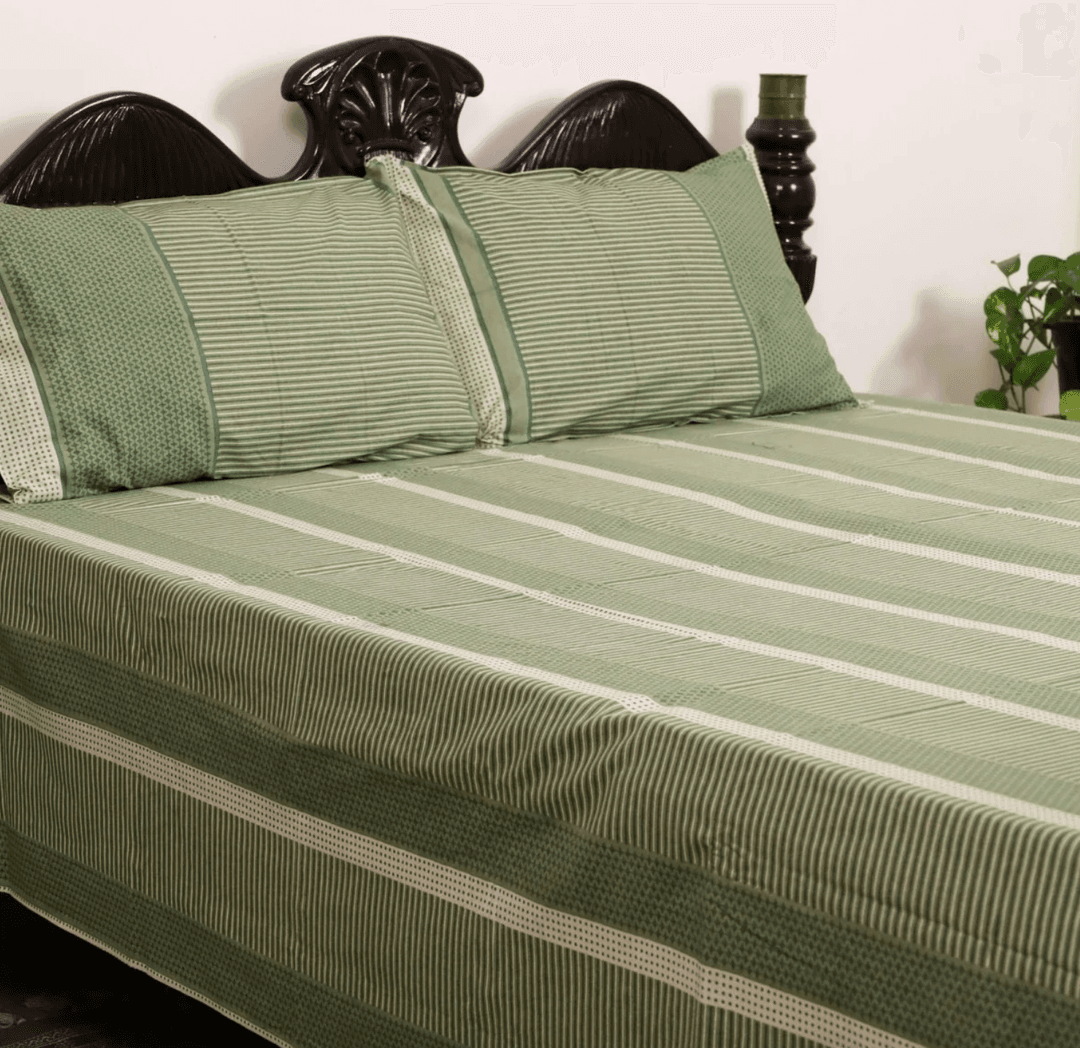
How to Select the Right Bedsheet for Summer, Winter & Monsoon
• By Richa Kumari
• 2026-01-02
Frequently Asked Questions
1) Which fabric is best for India’s weather?
Cotton or linen. They breathe, dry fast, and stay cool - whether it’s a dry Delhi afternoon or a coastal monsoon.
2) What’s the difference between percale and sateen?
Percale feels crisp and light, like fresh laundry. Sateen is smoother, with a hint of sheen - perfect when nights get cooler.
3) Are hand-block printed sheets durable?
Yes. When printed on sturdy cotton and treated gently, they last for years - and only grow softer with time.
 Free DeliveryAcross India
 100%Hand-crafted
 COD Available
 Easy Returns