


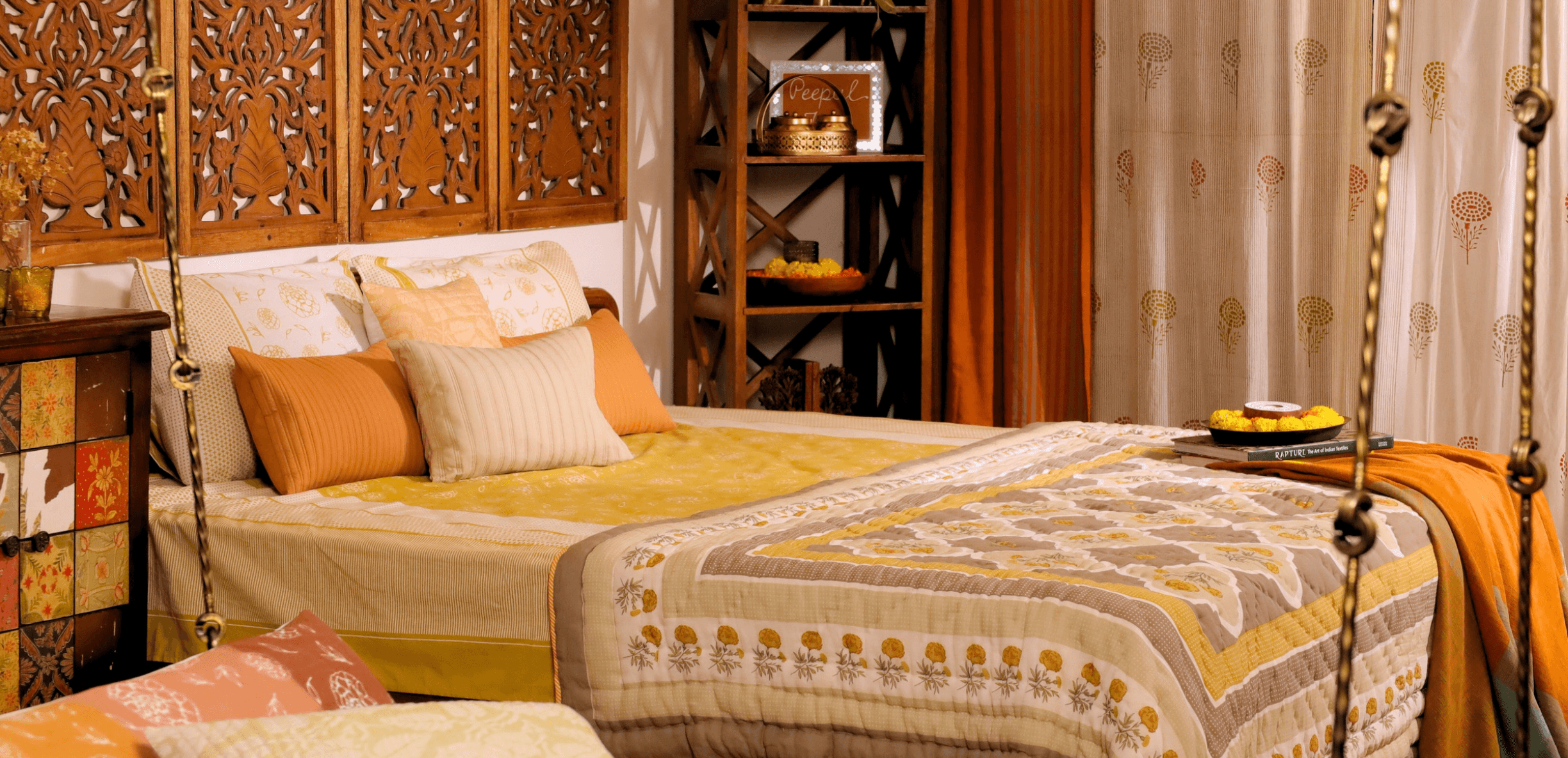


Microfiber Bed Sheets Explained: Are They Worth It?
• By Anamika
• 2025-11-25
• 9 mins read
Walk into any home-linen aisle today and you’ll spot neatly stacked packets marked microfiber bed sheets - soft to the touch, surprisingly smooth, and often half the price of cotton. They promise comfort without the fuss. Yet one question lingers for many: what exactly is microfiber?
To answer that, we need to step into the quiet world of threads, where science meets daily comfort.
What are Microfiber Bed Sheets?
Microfiber isn’t a plant or a natural yarn. It’s a man-made marvel born from innovation. Each fiber is spun from polyester or a polyester–nylon blend, so fine that dozens of them could fit across a single strand of human hair. They feel smooth, soft, and almost satiny when they are weaved together.
What makes microfiber fascinating is the precision of its weave. The tighter the weave, the smoother and more durable the fabric becomes. That’s why a good microfiber sheet doesn’t wrinkle or fade easily and often looks freshly pressed right out of the dryer.
For many modern homes, it’s the sweet spot between affordability, durability, and that instant “made bed” look we all secretly love.
How Microfiber Sheets are Made?
There is a fairly complicated process that goes into making every smooth sheet. Microfiber begins as liquid polymers that are pushed through microscopic nozzles, forming filaments so slender they shimmer under light. These filaments are then woven or knit into fabric.
- Brushed microfiber feels velvety, with a peach-skin finish perfect for cooler nights.
- Flat-weave microfiber stays lighter and crisper - a practical choice for warm regions.
Once woven, the fabric is often treated for color stability and anti-pilling. Some manufacturers even add a touch of moisture-control coating to help it breathe better.
The result? A fabric that stands up beautifully to everyday use yet still feels soft enough to sink into.
How do Microfiber Sheets Feel?
If you’ve ever run your hand across a new microfiber sheet, you’ll understand its charm. There’s a buttery smoothness, a surface that glides rather than grips. The texture is sleek, not slippery, giving just enough friction to feel snug.
Unlike crisp cotton or textured linen, microfiber offers a sense of uniform softness - the same smooth feel corner to corner. That consistency is part of why it’s become a favorite in hotels and guest rooms: it always looks presentable and feels freshly made.
Benefits of Microfiber Sheets
1. Soft and Smooth Feel
Microfiber feels plush without being heavy. Its silky texture makes bedtime feel just a little more indulgent. The fine threads bend easily with movement, creating that floaty, smooth sensation when you slip under the covers. Even after dozens of washes, it rarely loses that softness.
2. Wrinkle-Free Look
It's nice when sheets stay put. The thick weave of microfiber makes it less likely to wrinkle and gives it a naturally smooth finish. They dry quickly in the machine, are easy to fold, and don't need to be ironed. Someone who is always on the go might think of this feature as a small pleasure.
3. Durable and Long-Lasting
Each tightly packed filament gives microfiber impressive strength. It resists thinning, tearing, and fading far longer than many natural fabrics. The color stays consistent, even after years of sunlight and washing. For families or rentals where bedding sees constant use, durability matters as much as design.
4. Low Maintenance
If bedding had a “carefree” category, microfiber would lead it. A gentle wash, a quick dry, and it’s ready again. No delicate cycles or special detergents required. This convenience makes it ideal for busy homes, student apartments, and anyone who wants comfort without extra effort.
5. Stain Resistance
Spill your morning tea? Microfiber often gives you a moment’s grace. Because the fibers are so tightly woven, liquids tend to sit on the surface instead of soaking in immediately. Wipe, rinse, and it’s gone - a practical win for parents, pet owners, or anyone prone to late-night snacking.
6. Budget Friendly
High-thread-count cotton or linen sheets are more expensive than good microfibre sheets. That means they are a cheap and easy way to make beds look new again. For first-time homeowners or big families who need more than one set, being affordable is just part of everyday life.
7. Quick Drying
A full load of cotton sheets can take hours to dry; microfiber is ready in half the time. Because it doesn't soak up much water, it dries evenly and quickly, which is great on hot days or when you need to quickly change the sheets before guests arrive.
Drawbacks of Microfiber Sheets
1. Less Breathable
Air doesn't flow as easily through microfiber fibers since they are so close together. On hot or humid nights, that can make the bed feel warmer. For tropical climates or naturally hot sleepers, cotton percale or linen might be more comfortable.
2. Static Build-Up
Synthetic fibers can attract a little static, especially in dry weather. The occasional “cling” when folding sheets is harmless but noticeable. A quick shake, a dryer sheet, or simply keeping indoor humidity balanced solves the issue.
3. Not Eco-Friendly
Here’s the honest trade-off: microfiber is petroleum-based. In addition, it doesn't break down naturally and can release small pieces into the water system when you wash it. Using a microfiber-catching laundry bag or choosing higher-grade microfiber that sheds less are both ways to help the earth.
4. Absorbs Oils and Sweat
The same tight weave that blocks stains can cling to body oils over time. Without regular washing, this may lead to dullness or mild discoloration. A weekly wash in warm water keeps them fresh and clean.
5. Can Feel Warm
In cooler weather, that cozy warmth is comforting. But in summer, microfiber may hold heat a bit too well. Pairing it with a lightweight blanket or using it in air-conditioned rooms balances comfort beautifully.
Who Should Use Microfiber Sheets?
Microfiber is for the practical dreamer - someone who loves a bed that looks hotel-neat every morning but doesn’t have the time to iron. It’s perfect for:
- Families who want easy-care bedding that survives frequent washing.
- Students or young professionals setting up their first homes.
- Cooler or drier climates where its warmth feels comforting.
- Allergy-sensitive sleepers, since the dense weave limits dust accumulation.
If you’re someone who values a crisp, airy feel over silky smoothness, you might lean toward cotton. But if convenience ranks high, microfiber easily wins.
How to Care for Microfiber Sheets?
Good care keeps microfiber looking and feeling its best:
Wash in cold or warm water on a gentle cycle.
Don't use bleach or softeners because they coat the fibers and make them less soft.
Dry on low heat or line-dry to prevent static.
Avoid mixing with cotton; cotton lint can cling to the surface.
Fold immediately after drying to preserve that wrinkle-free finish.
With minimal effort, they’ll look hotel-fresh for years.
Microfiber and Sustainability
Microfiber lasts longer, so you don't have to buy as much of it, which is a small environmental benefit. However, the fact that it is manmade makes it hard to work with. Smart shoppers can make better decisions by:
- Selecting recycled microfiber options when available.
- Using laundry filters to capture micro-particles.
- Air-drying to extend fabric life and save energy.
Small habits add up. When cared for mindfully, microfiber can coexist with sustainable living.
Conclusion
For many households, yes. Microfiber bed sheets are soft, clean, easy to clean, and cheap, which isn't always easy to find. They’re the practical layer that fits real life - from weekday rushes to last-minute guest visits.
Still, they’re not for everyone. If breathability and eco-purity top your list, natural fibers may win your heart. But if your idea of perfect bedding is something that looks great, feels smooth, and dries before your next cup of tea, microfiber deserves its spot in your linen cupboard.


Rust & Off White Cotton Bedsheet with Pillow Cover | Marigold Collection - 90 x 108 Inches / Pure Cotton / Rust & Off White

Pure Cotton Bedsheet for Double bed with 2 Pillow Covers | Fern Green & Off White |Handprinted | Marigold Collection

Cotton Bed sheet with Pillow Cover in Mustard and Off White | Queen Size 90 x 108 Inches| Pure Cotton

Cotton Bed sheet in Taupe and Off White design with a Pillow Cover | Queen Size 90 x 108 Inches |Pure Cotton

Pure Cotton Double Bedsheet Set With 2 Pillow Covers | Hand Printed in Blue & Grey | Handmade In India - 90 X 108 Inches / Pure Cotton / Grey, Blue & White
You May also Like
Benefits of Choosing Eco-Friendly Home Decor
• By Anamika
• 2026-01-07
Why choose Handmade Products over Mass-Produced Products
• By Anamika
• 2026-01-07
Lippan Art vs Other Indian Wall Arts: Key Differences & Which Is Best for Your Home
• By Richa Kumari
• 2026-01-02
How to Choose the Right Lippan Art Size for Your Wall | Expert Sizing Guide
• By Richa Kumari
• 2026-01-02
How to Select the Right Bedsheet for Summer, Winter & Monsoon
• By Richa Kumari
• 2026-01-02
Frequently Asked Questions
1. What does microfibre really come from?
Microfiber sheets are made from very fine synthetic fibers, mostly polyester or a mix of polyester and nylon. These fibers make the surface smooth and resistant to wrinkles.
2. Are microfiber sheets suitable for hot sleepers?
They can feel warm in humid conditions because of the dense weave. For cooler comfort, pair them with breathable bedding or choose cotton percale.
3. Do microfiber sheets last long?
Yes. High-quality microfiber can last several years without thinning or losing color. Regular washing on low heat preserves its life even longer.
4. In what way should I clean microfiber?
Do not use fabric softeners and wash each item separately in cool water. Dry on low heat. The sheets will stay soft, lint-free, and smooth.
5. If you have sensitive skin, is microfiber okay to use?
Yes, most of the time. Pollen and dust mites can't get through the tight weave. People who are sensitive to synthetics should take the test first.
 Free DeliveryAcross India
 100%Hand-crafted
 COD Available
 Easy Returns