


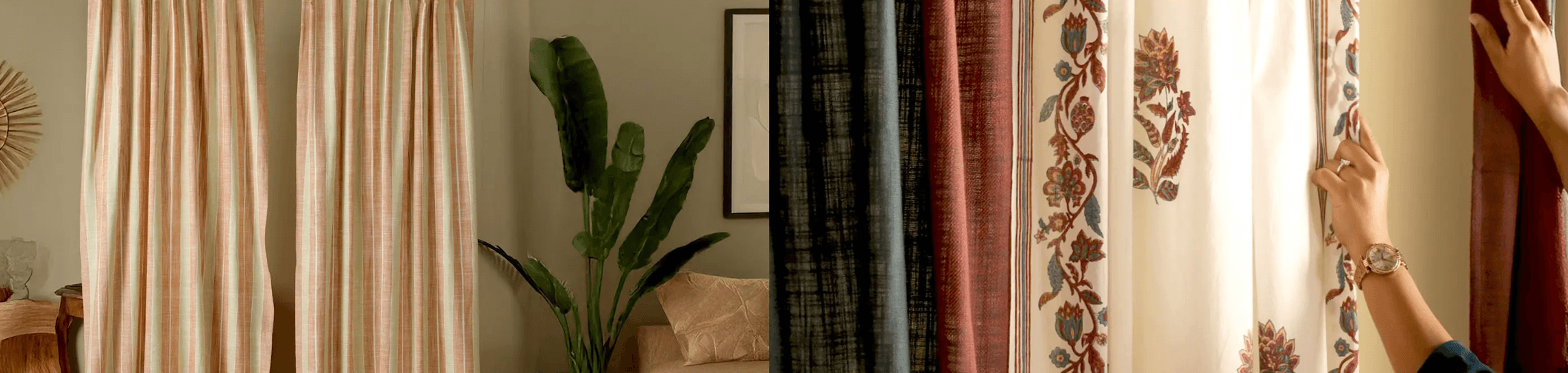


Curtain Fabric Types: Complete Guide to Choosing the Best Material
• By Richa
• 2025-12-05
• 17 mins read
Choosing curtain fabric seems simple-until you step into the world of cotton, linen, velvet, silk, blackout, voile, jacquard, blends and more. Each fabric behaves differently with light, drape, durability, and daily use. Some make a room breezy and bright; others create a cosy, insulated cocoon. The trick is knowing which material suits your room, climate, lifestyle, and décor goals. This guide breaks down every major curtain fabric type, their strengths, limitations, best uses, and how to decide which fabric will serve your home best.
Whether you’re choosing elegant cotton curtains for a living room, soft sheers for diffused sunlight, or premium linen curtains for a minimal aesthetic, this guide will help you compare materials clearly and pick the perfect fit for your home.
What Are the Main Types of Curtain Fabrics?
Below is a complete breakdown of the most commonly used curtain materials, how they behave, and where they fit best. Each section includes texture, durability, and everyday practicality-exactly what homeowners need before shopping.
Cotton Curtains
Cotton is one of the most versatile, breathable, and home-friendly curtain fabrics. It drapes naturally, offers medium weight, and works across all décor styles-from minimal to traditional to contemporary. Cotton curtains fall well, don’t cling, and maintain their structure beautifully with light steaming. They also wash easily, making them ideal for Indian households where curtains often face dust, humidity, and daily use. Cotton offers excellent light filtering-softening glare without darkening the room.
Cotton is especially valuable in handcrafted styles, such as Peepul Tree’s handwoven cotton and mulmul curtain sets, where the natural fibres retain their flow and softness beautifully over time.
Linen Curtains
Linen is known for its casual elegance and luxurious texture. It has a slightly crisp, airy feel and adds natural sophistication to any room. Linen curtains filter light gently while keeping the room bright, making them perfect for living rooms and bedrooms with abundant natural light. The slight wrinkling is part of their charm, giving interiors a relaxed, organic look.
Linen requires a little more care than cotton-mild washing and light ironing-but its beauty and longevity make it worth the effort. Linen blends offer a slightly smoother, more manageable alternative if low maintenance is a priority.
Polyester Curtains
Polyester is durable, budget-friendly, wrinkle-resistant, and easy to maintain. It’s a favourite for ready-made curtains because it holds colour well, resists fading, and withstands daily wear. Polyester curtains are ideal for homes requiring low maintenance and quick cleaning. However, pure polyester can sometimes feel less breathable and less natural compared to cotton or linen.
Blended polyester fabrics enhance durability while offering a softer, more refined finish. These work especially well in living rooms, kids’ rooms, and rental homes.
Silk Curtains
Silk curtains are luxurious, elegant, and instantly elevate a room. Their natural sheen gives interiors a rich, formal look-ideal for drawing rooms, master bedrooms, or spaces with a vintage design theme. Silk drapes beautifully but requires gentle care and protection from harsh sunlight, as natural silk fibres fade easily.
If you want the silk look without the delicate maintenance, faux silk or silk blends replicate the aesthetic while being easier to handle.
Velvet Curtains
Velvet is thick, plush, and perfect for creating a warm, dramatic, high-end ambience. It offers excellent insulation and privacy, making it ideal for bedrooms, formal living rooms, home theatres, or spaces requiring acoustic softness. Velvet absorbs light rather than reflecting it, giving interiors a deeper, more intimate feel.
However, velvet attracts dust faster than lighter fabrics and requires regular brushing or steaming to maintain its plush appearance.
Sheer & Voile Curtains
Sheers are lightweight, airy fabrics that soften sunlight without blocking it entirely. Voile and mulmul sheers are perfect for rooms that rely on brightness or want a breezy, relaxed feel. They create a soft glow, add movement with the wind, and pair beautifully with heavier curtains.
Handwoven mulmul sheers like those used in Peepul Tree’s cotton door curtain sets allow light to filter through gracefully while still providing a layer of privacy, making them a perfect choice when shopping for a door curtains set online.
Blackout Fabric Curtains
Blackout curtains are made with tightly woven fabric or coated lining that blocks 90–100% of light. They are ideal for bedrooms, nurseries, night-shift households, and media rooms. Beyond light blocking, blackout curtains reduce heat, soften noise, and protect interiors from UV damage.
Blackout fabrics come in cotton, polyester, and blended materials. The thicker the weave, the better the insulation.
Thermal Curtains
Thermal curtains are designed to regulate room temperature. Their layered construction-often cotton or polyester with insulating backing-helps keep heat out in summer and prevent heat loss in winter. They are excellent for AC-heavy rooms and homes in extreme climates.
Brocade & Jacquard Curtains
These fabrics feature woven patterns rather than printed ones. Brocade is rich, ornate, and perfect for classical décor. Jacquard is slightly lighter, offering modern or traditional motifs woven directly into the fabric. Both add depth and texture and suit formal areas where elegance is key.
Lace Curtains
Lace curtains add softness, romance, and charm. They offer minimum privacy but maximum aesthetic value. Often used in vintage, cottage-style, or feminine interiors, lace curtains pair beautifully with cotton or blackout layers.
Blend Fabrics (Poly-Cotton, Linen Blends)
Blended fabrics combine the breathability of natural fibres with the durability of synthetic ones. Poly-cotton stays crisp, holds colour well, and is affordable. Linen blends reduce wrinkling while maintaining a natural texture. These fabrics are practical for Indian homes where ease of washing is important.
Best Curtain Fabric for Each Room
Choosing the right curtain fabric becomes much simpler when you think room-by-room. Every space in your home behaves differently - the living room gets the most dust and daylight, the bedroom needs privacy, the kitchen deals with humidity, and the kids’ room demands durability. Below is a detailed breakdown that helps you match fabric with functionality, ensuring every room feels intentional and well put-together.
Best Fabric for Living Room Curtains
The living room is where you host, spend the most time, and see the maximum natural light. The fabric you choose for this space should balance beauty, drape, and durability. Cotton, linen, and poly-cotton blends stand out as the most practical choices because they handle daily dust and movement well while still looking elegant.
Cotton curtains are perfect if you're looking for an everyday, breathable fabric with a soft fall. They work beautifully in homes that prefer natural textures and subtle sophistication. Linen curtains elevate the room instantly - their textured weave filters light in a beautifully diffused way, making the space look warm and curated. Poly-cotton blends work best when you want minimal upkeep, especially for homes near busy roads where dust settles quickly.For a softer, layered look, pair a cotton or linen curtain with sheer mulmul or voile panels. This lets you control light throughout the day while keeping the living room bright and airy.
Best Fabric for Bedroom Curtains
Bedrooms need a delicate balance - privacy, restfulness, and gentle light control. The right fabric helps the space feel cocooned without feeling closed off.
If you prefer complete darkness for sleep, opt for blackout fabrics or blackout-lined curtains. They also protect your bedroom upholstery from sunlight. For softer illumination, cotton and cotton-linen blends work beautifully because they filter enough daylight without exposing the room. Adding a mulmul sheer layer behind cotton curtains gives the room a dreamy glow during the day while maintaining privacy. If you love a luxurious, hotel-style ambience, velvet curtains add depth, block noise, and create a warmer environment - ideal for colder climates or air-conditioned bedrooms. Overall, bedroom curtains should feel calming, grounded, and aligned with your sleeping habits.
Best Fabric for Kids’ Room Curtains
Kids’ rooms face more wear and tear than any other room. Curtains here must be washable, durable, wrinkle-resistant, and safe. Cotton curtains are the most comfortable choice because they are natural, gentle on the skin, and easy to throw into a washing machine.Polyester blends work wonderfully too - they resist staining, don’t wrinkle easily, and maintain shape even after frequent washing. If your child takes daytime naps, blackout curtains help create a dark, quiet environment, which is especially helpful during summers when sunlight is harsh. Avoid delicate fabrics like silk, linen, lace, or velvet, as they fray, wrinkle, or absorb stains quickly. Kids’ rooms benefit from fabrics that can survive crayons, dust, spills, and non-stop activity.
Best Fabric for Kitchen Curtains
Kitchen curtains require practicality above everything else. This is a space with moisture, heat, occasional grease, and constant movement. The fabric must withstand frequent cleaning without losing its structure. Cotton curtains are ideal because they breathe well, wash easily, and don’t trap smells when cleaned regularly. For those who prefer low-maintenance solutions, polyester curtains are excellent - they resist staining better than natural fabrics and dry quickly after washing. Avoid linen, which absorbs moisture and wrinkles heavily, and avoid velvet or other heavy fabrics that attract kitchen odours and are difficult to maintain.
Curtain Fabric by Functional Need
Choosing curtains based on fabric alone isn’t enough - functionality matters just as much. Every room has a different requirement: some need privacy, others need light, some demand heat insulation, and some simply need softness. Below is a practical breakdown that helps match the right fabric with the right purpose.
Best Fabric for Privacy Curtains
Privacy curtains should shield interiors without making the room feel heavy or closed off. Cotton curtains strike the perfect balance - they offer coverage while still letting in soft daylight. Velvet is ideal for bedrooms or media rooms, where deeper privacy and richness are desired. Blackout fabrics provide the highest level of privacy by blocking both visibility and light. For a more breathable option, thicker poly-cotton blends offer strong coverage without the weight of velvet or blackout lining. These fabrics work well in urban apartments, ground-floor homes, and rooms facing busy streets.
Best Fabric for Sunlight Control / UV Protection
Harsh sunlight can fade furniture, flooring, and curtain colours. For rooms that receive intense light, blackout curtains provide maximum sun protection by blocking 80–100% of UV rays. Thick cotton curtains are the next best choice, especially when paired with lining. Thermal curtains offer excellent insulation and UV resistance, keeping both glare and heat under control. A smart design trick is layering: mulmul or voile sheers under cotton curtains, which filters light throughout the day and reduces direct UV exposure without darkening the room completely.
Best Fabric for Heat Insulation
If your room gets too hot during the day, your curtain fabric can significantly reduce the temperature. Velvet curtains naturally insulate due to their plush weave. Thermal curtains contain insulated lining designed to reflect heat. Heavy blackout cotton curtains also work well in Indian summers, helping keep the room cooler while protecting upholstery from heat damage. These fabrics are especially effective in west-facing rooms or air-conditioned spaces where energy efficiency matters.
Best Noise-Reducing Curtain Material
Sound absorption depends on fabric density and structure. Velvet is the strongest performer here - its heavy, layered weave naturally dampens external noise. Thick blackout fabrics also contribute to quieter interiors by absorbing sound vibrations. These materials are recommended for bedrooms, home offices, and apartments near traffic-heavy areas.
Best Fabric for Sheer Curtains
Sheers are meant to filter light beautifully and create softness. Mulmul is the most elegant sheer option, loved for its airy drape and fine texture - as seen in Peepul Tree’s dual-layer cotton-mulmul curtain sets. Voile, organza, chiffon, and light poly-mesh fabrics also make excellent sheers, depending on how crisp or fluid you want the fall to be. These fabrics brighten rooms naturally while maintaining daytime privacy.
Curtain Fabric Durability & Maintenance Comparison
Not all fabrics age the same way. Some last years with minimal upkeep, while others need careful handling. Below is a clear, expanded comparison to help you choose smartly based on durability and care needs.
Most Durable Curtain Fabrics
If longevity is your priority, choose polyester, poly-cotton blends, blackout fabrics, or jacquard curtains. These fabrics resist wear, maintain colour longer, and handle repeated movement well. They are ideal for high-traffic rooms, sunny spaces, and homes that prefer low-maintenance materials.
Easiest to Wash (Machine-Washable Fabrics)
Curtains that can be machine washed without losing shape include cotton, poly-cotton blends, mulmul sheers, and polyester. They dry quickly, don’t require dry cleaning, and stay fresh with simple weekly care. These fabrics suit homes with children, pets, or exposure to dust.
Fabrics to Avoid for Humid Areas
Bathrooms, coastal homes, and kitchens experience excess humidity. Silk, velvet, and linen tend to absorb moisture, leading to wrinkles, mildew patches, or stiffness over time. In such areas, it’s best to choose cotton, poly-cotton blends, or polyester because they dry faster and remain stable.
Fade-Resistant Fabrics for Sunny Rooms
Bright rooms demand fabrics that don’t fade quickly. Polyester, poly-cotton blends, jacquard, and deeper-toned cotton curtains hold colour better when exposed to long hours of sunlight. If you live in a high-sunlight region, choose fabrics with tighter weaves and richer dyes.
Budget-Based Curtain Fabric Choices
Curtain shopping becomes much easier when you approach it by budget. Here is a clear, expanded breakdown to help you pick fabrics without compromising on style or longevity.
Budget-Friendly Fabrics
If you're decorating on a budget, polyester, poly-cotton blends, and printed cotton curtains offer excellent value. They are durable, easy to maintain, resist fading, and come in a wide range of colours and designs. Basic sheers are also cost-effective and help rooms feel airy without large investment.
Mid-Range Options
In the mid-tier category, you’ll find linen blends, thicker premium cotton curtains, jacquard fabrics, and embroidered sheers. These fabrics offer a balance of elevation and practicality, making them ideal for living rooms or master bedrooms that need refinement without steep pricing.
Premium & Luxury Fabrics
For homes that prioritise luxury, silk, pure linen, velvet, and ornate brocade or jacquard fabrics are unmatched. These materials elevate a room instantly with their dramatic drape, rich texture, and heritage-inspired craftsmanship. They require more careful maintenance but offer timeless sophistication and presence.



Pure Cotton Door Curtain in 7ft | Set of 3 Assorted Curtains in Maroon Navy Blue and Ivory | Gentle Machine Wash or Hand Wash | Chintz Collection - 7ft / Cotton / Navy Ivory Red

Pure Cotton Door Curtain in 7ft | Set of 3 Assorted Curtains in Off White | Navy and Brick Red | Gentle Machine Wash or Hand Wash | Chintz Collection - 7ft / Cotton / White Navy Red

Curtain set of Handwoven and Sheer Curtain made with Pure cotton | Ivory, Rust, Mustard and Teal | 7 Feet | Set of 3 and 4 Curtains

Cotton Semi Sheer Window Curtains |5 and 7 Feet | Handwoven Beige and White Cutwork| Handmade In India - 7 Feet / Pack Of 1 / White

Curtain set of 2 Handwoven and 1 Printed Curtain made with Pure cotton | Blue and Dusty Pink | 7 Feet | Set of 3 Curtains

Curtain set of 2 Printed and 2 sheer Curtains made with Pure cotton and fine mulmul | Rust and Maroon | 7 Feet | Set of 4 Curtains
You May also Like
Benefits of Choosing Eco-Friendly Home Decor
• By Anamika
• 2026-01-07
Why choose Handmade Products over Mass-Produced Products
• By Anamika
• 2026-01-07
Lippan Art vs Other Indian Wall Arts: Key Differences & Which Is Best for Your Home
• By Richa Kumari
• 2026-01-02
How to Choose the Right Lippan Art Size for Your Wall | Expert Sizing Guide
• By Richa Kumari
• 2026-01-02
How to Select the Right Bedsheet for Summer, Winter & Monsoon
• By Richa Kumari
• 2026-01-02
Frequently Asked Questions
1) Which curtain fabric lasts the longest?
Polyester, jacquard, and cotton-blend fabrics last the longest and withstand daily wear.
2) Which fabric is best for sunlight-heavy rooms?
Fade-resistant materials like polyester, poly-cotton, and jacquard perform best in strong sunlight.
3) Are cotton curtains good for Indian homes?
Yes, cotton is breathable, versatile, washable, and ideal for Indian climates and décor styles.
 Free DeliveryAcross India
 100%Hand-crafted
 COD Available
 Easy Returns