


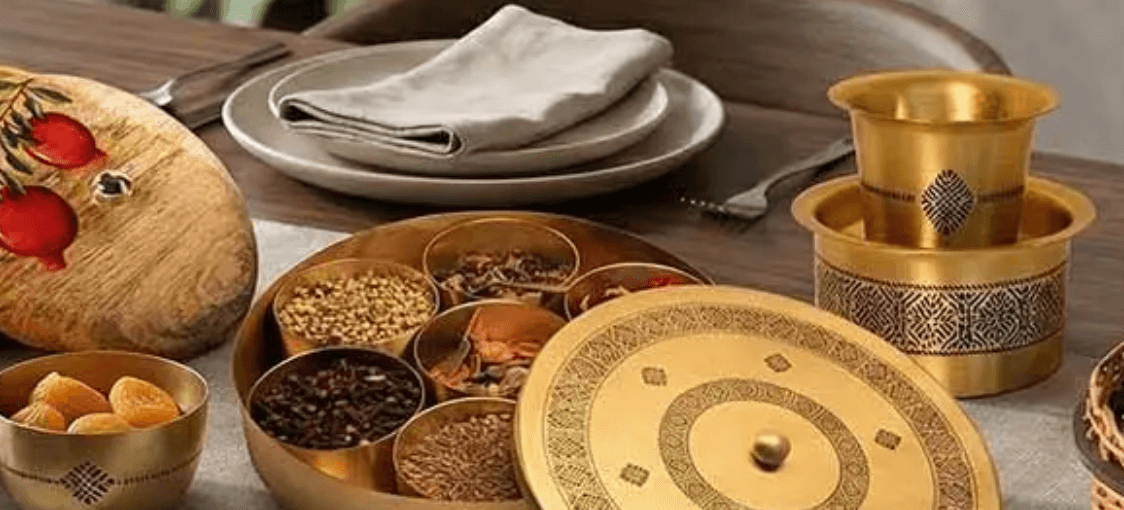


Health Benefits of Cooking in Brass Utensils
• By Richa Kumari
• 2025-12-22
• 31 mins read
Brass utensils are safe and reliable cooking vessels when they are properly tin-lined, as the tin coating prevents food from reacting with the metal. A well-lined brass kadai or pot distributes heat evenly, preserves nutrients, and enhances flavour while supporting healthier digestion. These qualities form the core of brass utensils benefits, which is why brass has remained a trusted material in Indian kitchens for generations and continues to offer clear cooking and wellness advantages when used correctly.
The reason brass performs so well is its balance of copper and zinc, two metals known for their ability to conduct heat smoothly. When you place a brass utensil on the flame, it warms gradually and stays warm for longer, helping dishes cook evenly without burning. This is especially useful for recipes that need slow cooking or controlled heat, the kind of dishes that taste better when not rushed.
What makes brass especially appealing today is that it combines heritage with practicality. It reminds us of thoughtful cooking practices while offering qualities that still matter in contemporary homes. When used correctly, lined properly, and cared for, brass becomes one of the most rewarding metals to cook with, both for taste and for overall well-being. If you’re exploring traditional cookware or planning to buy authentic brass items online, it helps to first understand why brass has been trusted for centuries in Indian kitchens.
Nutritional Benefits of Cooking in Brass Utensils
Cooking in brass utensils supports nutrition in a natural, practical way because the alloy of copper and zinc works well with slow, even heating. When a brass vessel is properly tin-lined, it protects the food from any reaction while allowing ingredients to cook gently and retain more nutrients. This combination of controlled heat and protective lining is what made brass so valuable in traditional kitchens, where flavour and nourishment were equally important.
How Copper and Zinc Support Wellness
Copper and zinc do not leach significantly from a lined vessel, but their presence in the alloy indirectly supports better nutrient preservation. These metals are essential for several bodily functions, especially those related to immunity and energy production. Cooking in brass helps retain nutritional value by preventing aggressive heat exposure.
Key wellness roles include:
- Copper supports iron absorption, which helps maintain healthy haemoglobin levels.
- Zinc strengthens immune response and supports cellular repair.
- Together, these minerals contribute to maintaining overall metabolic balance.
- The alloy structure ensures smooth heat flow, helping food stay nutrient-rich.
- Gentle heating helps protect vitamins that degrade under high temperatures.
Supports Better Digestion
One of the reasons older generations preferred brass is the way it affects digestion. The slow, even heat allows dals, vegetables, and grains to soften naturally, making meals easier on the stomach. This is especially helpful in Indian households where comfort foods are slow-cooked.
Benefits for digestion include:
- Food cooks uniformly, preventing overcooking or burning.
- Slow simmering reduces the chance of meals causing acidity.
- Softer textures support gut comfort and easier absorption.
- Traditional dishes like dal, khichdi, or halwa become more soothing.
- The warmth retained in the vessel keeps food naturally comforting.
Helps Preserve Good Fats and Natural Oils
Indian cooking relies on ghee, coconut oil, sesame oil, and cold-pressed oils not only for taste but also for their nutritional benefits. Brass is ideal for these fats because it heats gradually and avoids sharp temperature spikes that can break down healthy compounds.
Nutritional advantages for fats include:
- Controlled heat protects the structure of good fats.
- Oils retain their aroma and natural antioxidants.
- Dishes feel lighter because oils are not overheated.
- Better oil stability improves flavour and digestibility.
- Brass promotes slow cooking, which pairs well with Indian oils.
Supports everyday Nutrition for Families
When used regularly, brass enhances the overall nutritional quality of daily meals. It encourages slower cooking habits, reduces the risk of nutrient loss, and helps maintain the natural character of ingredients.
everyday benefits include:
- More nutrient retention in vegetables and lentils.
- Better texture that feels satisfying and wholesome.
- Reduced chances of food sticking or burning.
- Ideal for dishes meant to be nourishing rather than fast-cooked.
- Complements modern healthy-eating choices without lifestyle changes.
In essence, brass elevates the everyday act of cooking. It delivers meals that feel fuller, taste better, and support the body more naturally. This blend of tradition, nutrition, and practicality is what keeps brass relevant in modern Indian kitchens.
Ayurveda on Brass: Why Ancient Kitchens Preferred It?
Ayurveda has always viewed kitchen metals as more than vessels. Each metal influences the body differently, and brass holds a special place because of its calming, balancing nature when used correctly. In traditional Indian homes, a brass kadai or lota was not chosen for aesthetics alone. It was believed to support digestion, regulate internal heat, and promote overall balance in daily meals. This connection between metal and wellness is why brass became a constant in Ayurvedic-inspired cooking.
Balances Vata and Pitta Naturally
Ayurveda explains that the body stays healthy when its doshas are in harmony. Brass, with its grounding and steady-heating qualities, supports this balance. It helps stabilise foods that tend to aggravate digestive fire or create internal dryness.
How brass supports dosha balance:
- Brass’s steady heat helps calm an overactive Vata, which often causes bloating or restlessness.
- It keeps Pitta balanced by preventing overheating of food during cooking.
- Slow-cooked dishes become easier to digest, which aligns with Ayurvedic eating principles.
- Ideal for foods that need gentle, consistent warmth rather than intense flame.
- encourages mindful cooking habits, something Ayurveda emphasises deeply.
Supports Digestion and Gut Health
One of the strongest Ayurvedic reasons for using brass is its impact on digestion. Traditional practitioners believed that food cooked slowly in brass carries less digestive stress and promotes smoother assimilation of nutrients.
Brass and gut comfort work well together because:
- even heating reduces the chance of food becoming heavy or acidic.
- Dals, kadhi, sabzis, and kheer get a softer texture that the stomach finds easier to handle.
- Brass keeps meals warm longer, supporting better digestive fire after eating.
- Food feels more wholesome, especially when eaten fresh from the vessel.
- Ideal for dishes prepared for children or elders with sensitive digestion.
Why Brass Kadhai, Lota, and Serving Bowls Were Preferred
Ancient kitchens never chose vessels randomly. Each shape and metal had a purpose, and brass held a unique place because it supported cooking and serving in ways that aligned with Ayurvedic routines. Its steady heat, grounding nature, and ability to maintain warmth made it an essential part of everyday meals. This is why families often invested in durable brassware that could be used across generations.
Reasons they were widely used:
- Brass kadais maintained stable heat for sabzis, gravies, and sweets.
- Brass lotas naturally cooled water without making it icy, supporting daily hydration and digestive comfort.
- Brass serving bowls, including handcrafted options like the Handcrafted Brass Serving Bowls (Handmade in India) from Peepul Tree, kept food warm until it reached the table and ensured consistency in texture.
- The metal encouraged slow, mindful cooking, which helped preserve prana (vital energy) in food.
- even heat distribution supported balanced meals that felt nourishing and aligned with Ayurvedic eating practices.
Ayurvedic Logic Behind Foods Cooked in Brass
Ayurveda has always emphasised that the right vessel enhances the quality of a dish. Brass was often chosen for recipes that needed warmth, richness, and steady cooking rather than sharp flavours or acidity.
Foods traditionally suited for brass:
- Ghee-rich dishes like halwa or lapsi benefit from brass’s even heating.
- Dals and kheer develop a smoother, silkier texture.
- Mild spices like jeera, hing, and haldi bloom beautifully in brass.
- Milk-based recipes stay warm longer, which Ayurveda considers good for digestion.
- everyday sabzis gain a fuller, rounder flavour profile.
In many Indian households, Ayurvedic reasoning blended seamlessly with everyday cooking habits. Brass was not seen as a trend but as a vessel that supported the natural rhythms of digestion, nourishment, and balance. This deep-rooted understanding explains why ancient kitchens trusted brass long before modern cookware entered the market.
What Foods Should NOT Be Cooked in Brass?
even though brass is a safe and beneficial metal when properly tin-lined, it should not be used for cooking acidic foods. The reason is simple: acidic ingredients can react with the copper component of brass when the tin lining wears off or becomes thin. This reaction can change the taste of food and may make the dish unsafe to consume. Understanding these boundaries helps you enjoy brass safely without compromising flavour or health.
Foods You Should Avoid Cooking in Brass
These common ingredients should never be cooked directly in brass vessels if they contain acid or cause souring.
Avoid cooking these foods in brass:
- Lemon-based dishes, like lemon rice or lemon rasam.
- Tamarind-heavy recipes, such as sambhar or pulusu.
- Vinegar-based preparations, including pickles or marinades.
- Curd or buttermilk, especially when heated.
- Tomato-rich gravies, including paneer makhani or tomato chutneys.
These ingredients turn sour during cooking or contain natural acids. When they touch the metal directly, especially if the tin lining has thinned, the acid can react with the copper content in brass, affecting both safety and taste.
Why Acidic Foods React With Brass?
Brass is an alloy of copper and zinc. Once the tin coating wears off or develops scratches, acidic foods begin interacting with the base metal. This is why classical Indian kitchens always maintained their kalai (tin lining).
What happens during the reaction:
- Acids dissolve tiny particles of copper from the metal surface.
- This creates a change in taste, smell, and colour of the food.
- Over time, regular exposure to acidic ingredients damages the vessel.
- The dish may become bitter, metallic, or unsafe to consume.
- High heat accelerates this reaction, making it riskier for cooking sours.
Does This Mean Brass Is Unsafe?
Not at all. Brass is safe, reliable, and healthy as long as it is tin-lined and used correctly. The metal becomes unsafe only when the tin lining is missing or damaged, which is why traditional families always get their utensils re-coated at the right time.
How to avoid risks:
- Always ensure the tin lining is intact and smooth.
- Never use unlined brass for any cooking purpose.
- Keep brass exclusively for dishes that do not contain acids.
- Use stainless steel, clay, or stoneware for sour recipes.
- Get the vessel re-tinned as soon as the coating turns dull or worn out.
Foods That Are Safe in Brass When Lined
Brass becomes exceptionally rewarding when used with the right ingredients. Once you avoid acidic items, the vessel performs beautifully for slow-cooked and everyday dishes.
Safe food categories include:
- Sabzis with mild spices.
- Dals, khichdi, and kheer.
- Halwa and Indian sweets.
- Milk-based preparations.
- Light frying and tadkas.
How to Use Brass Utensils Safely?
Using brass safely comes down to one core principle: the tin lining must always be intact. Brass on its own can react with acidic foods, but the tin layer (kalai) acts as a protective shield that keeps cooking safe and flavourful. When the lining is smooth, silvery, and well-maintained, brass becomes one of the most reliable metals for Indian cooking. This is why households earlier treated the local kalaiwala’s visit as a routine part of kitchen maintenance.
Tin lining is important not only for safety but also for performance. The coating prevents any interaction between food and the brass alloy while helping heat distribute evenly across the utensil. This ensures that your dals, sabzis, and sweets cook uniformly without sharp temperature spikes. Over time, though, the tin layer naturally wears off with washing and friction, which is why regular re-tinning becomes essential for long-term use. Ignoring the lining can reduce both the safety and the taste of the dish.
Why is Tin Lining important?
You’ll notice that brass cookware turns dull inside after months of use. This is usually the tin wearing off. When the lining gets thin, food may start sticking, tasting slightly metallic, or losing its natural colour. These are gentle early warnings. If ignored, acidic reactions can start, especially when the flame is high. So the safest approach is to maintain the lining before it becomes visibly worn or patchy.
When to get your brass utensil re-tinned:
- When the interior surface looks yellowish instead of silvery.
- When food begins sticking more than usual.
- When you see thin patches or discoloration inside the vessel.
- When the taste of the dish feels slightly metallic or unusual.
- After every 8 to 12 months, depending on frequency of use.
Daily Safety Guidelines
Brass lasts beautifully when used with a little care. These small habits make the vessel safer and help extend the life of the tin coating.
Follow these safe-use practices:
- Keep the flame on medium or low for most dishes.
- Avoid scraping the base with sharp metal ladles.
- Do not use the utensil if you see exposed brass.
- Wash with mild soap and a soft scrubber.
- Dry thoroughly to avoid moisture stains or dullness.
How Often Should You Re-tin Brass Utensils?
Most families re-tin their brassware once or twice a year, depending on how frequently the utensil is used. Daily-use brass, such as a kadai or a serving bowl, may need lining sooner than a decorative or occasional-use piece. The process takes just a few minutes and preserves the vessel for years. Regular kalai ensures that your utensil continues to behave exactly as it should: safe, steady, and flavour-enhancing.
When brass is kept in good condition, it becomes one of the most dependable metals in the kitchen. The vessel rewards you with better heat control, cleaner flavours, and meals that feel gentler on the stomach. A well-maintained tin lining ensures that these benefits stay consistent every time you cook.
Do Brass Utensils Add Zinc or Minerals to Food?
A common question many people ask is whether brass utensils release minerals like zinc or copper into food. The short answer is that a properly tin-lined brass utensil does not release significant minerals into your meals. The tin coating acts as a protective barrier, preventing direct contact between food and the alloy beneath. This keeps cooking safe and avoids any unwanted flavour changes or reactions. So, while brass contains beneficial metals, a lined vessel focuses more on cooking performance than mineral transfer.
That said, small and safe levels of mineral interaction may occur only when the lining becomes worn or extremely thin. This is why families traditionally re-tinned brass at the right time. When the tin layer is fresh and intact, the food absorbs no harmful amounts of copper or zinc. In fact, this is exactly why brass has been trusted for generations. The metal is valued for steady heating, comfort to the stomach, and flavour enhancement, not for supplementing minerals through leaching.
When Does Mineral Transfer Happen?
Mineral transfer becomes a concern only if the tin lining has faded and the brass alloy underneath becomes exposed. In such cases, acidic or salty foods may react with the copper component of brass. This is why regular kalai is so important. Most households used to visualise the lining every now and then to make sure it stayed bright and smooth.
Situations where mineral leaching can occur:
- When the tin coating has visible yellow patches.
- When cooking acidic dishes in unlined brass.
- When the vessel is heated, it is empty for a long time.
- When the interior becomes scratched or scraped.
- When the flame is kept excessively high.
Is Mineral Release Ever Beneficial?
Some people believe that brass enriches food with minerals. This is only partially true. Safe mineral contact happens only in trace, insignificant amounts, mainly when water or milk is kept in well-lined brass containers for a short period. These minimal interactions are not unsafe, but they are not high enough to be considered nutritional supplementation. Ayurveda valued brass mainly for digestion and balanced cooking, not for mineral fortification.
Does Heat Increase Zinc or Copper Release?
Heat can accelerate reactions in unlined brass. But when the tin lining is intact, the food never touches the alloy, so no matter how long you cook, the dish remains safe. It is only when the lining is compromised that temperature becomes a factor.
Important points to remember:
- Heat does not cause mineral release in lined brass utensils.
- High flame can increase reactions only in unlined brass.
- Zinc and copper transfer is negligible when the coating is healthy.
- Lined brass is safe for long-duration cooking like dals or kheer.
- Safe usage depends entirely on the condition of the lining.
Myth vs Reality
Many misconceptions circulate about brass leaching metals. The reality is simple: lined brass is safe and stable, and that is exactly why Indian kitchens relied on it for centuries. Problems arise only when the utensil is used after the tin lining has worn off.
Overall, brass utensils do not enrich food with minerals in any significant way. Their true advantage lies in the comfort of cooking, the even distribution of heat, and the gentle, nourishing quality they bring to everyday meals.
Benefits of Brass Kadai, Pots and Serving Bowls
Brass utensils are valued because they create a calm, steady cooking environment. A well-lined brass kadai warms gradually, cooks evenly, and holds heat longer than most modern metals. This makes everyday dishes feel more balanced and flavourful without needing extra effort. even for serving, pieces like Peepul Tree’s elegant Brass Serving Bowl with etched Kanjeevaram Design help maintain warmth and enhance presentation, making them ideal for both daily meals and special occasions. For Indian cooking styles that rely on slow simmering, gentle thickening, and controlled heat, brass naturally fits in.
Even Heating for Consistent Results
Brass spreads heat smoothly, helping ingredients cook at the same pace. Why this matters:
- Reduces chances of food sticking or catching at the base.
- Keeps vegetables firm yet fully cooked.
- Gives dals and gravies a uniform, creamy finish.
- Supports slow reduction in kheer or halwa.
Better Flavour Development
Because brass avoids sudden temperature spikes, ingredients release their flavours gradually. What improves:
- Ghee melts evenly and tastes richer.
- Spices bloom without burning.
- Milk-based dishes thicken more naturally.
- Sweet recipes gain a more rounded aroma.
Durable and Renewably Sustainable
Brass utensils last decades when the tin lining is maintained. Advantages:
- Strong alloy that withstands daily use.
- Kalai renewal restores the utensil each time.
- Works well for cooking and serving.
- Long lifespan makes it more sustainable than disposable cookware.
Brass offers a smoother, more balanced cooking experience. With proper lining and occasional maintenance, it becomes a dependable utensil that enhances both everyday meals and festive dishes.
Does Cooking in Brass Improve Taste?
Many people notice that dishes prepared in brass feel richer and more satisfying. While brass does not add flavour on its own, its slow and steady heating style brings out the natural taste of ingredients in a way that fast-cooking metals often cannot. This is why certain traditional dishes still taste distinctly better when cooked in brass, especially sweets, dals, and milk-based recipes.
Because brass heats from within and retains warmth longer, ingredients have more time to release their natural sweetness and aroma. Ghee melts smoothly, milk thickens without curdling, and spices bloom gently instead of burning. These small differences accumulate into a deeper, more rounded taste that feels comforting and nostalgic.
Dishes That Taste Better in Brass
Only include pointers where relevant, so here they help:
- Halwa, sheera, and lapsi gain a fuller caramelised flavour.
- Kheer thickens evenly and develops a richer body.
- Dal simmers smoothly and tastes more homely.
- Kadhi stays warm longer and feels more soothing.
- Lightly spiced sabzis retain their natural sweetness.
The improvement in taste comes from temperature stability, not from the metal itself. Brass supports slow cooking, and slow cooking supports flavour. This simple alignment is why many restaurants and home cooks still keep a brass kadai exclusively for sweets and milk-based dishes. It delivers comfort, warmth, and a familiar depth of flavour that people instinctively enjoy.
Are Brass Utensils Good for Daily Use?
Yes, brass utensils are suitable for daily use as long as the tin lining is maintained. A properly lined brass kadai or pot behaves like a stable, safe, everyday cooking vessel. It distributes heat evenly, keeps food warm for longer, and makes dals, sabzis, and kheer taste more rounded. For households that cook regularly, brass becomes a reliable choice that blends tradition with everyday practicality.
Brass works best for routine dishes that do not contain acidic ingredients. Many families use it daily for boiling milk, preparing dal, making sweets, or slow-cooking vegetables. even in food preparation, pieces like Peepul Tree’s Brass Masala Box (Masala Dabba) help keep spices fresh and organised, adding both convenience and heritage to everyday cooking. When used this way, the vessel stays safe, performs well, and maintains its lining for months. The cooking style it encourages is gentle and controlled, which suits everyday Indian meals.
How to Use Brass Daily Without Hassle
Pointers only where they help:
- Stick to non-acidic dishes like dal, kheer, sabzis, halwa, or milk-based recipes.
- Keep the flame at medium to protect the tin lining.
- Avoid metal ladles that scratch the surface.
- Re-tin the utensil once or twice a year.
- Dry thoroughly after washing to maintain shine and prevent dull patches.
Brass vs Non-stick for everyday Cooking
Non-stick cookware heats quickly but loses its coating over time. Brass, when maintained, offers longevity and better flavour development. Unlike non-stick, it has no chemical coating, and the tin lining can always be renewed. This makes it a more sustainable and dependable choice for everyday Indian meals.
Using brass daily is less about tradition and more about ease. Once you understand which dishes suit it and how to care for the lining, it becomes one of the most comforting and trustworthy utensils in the kitchen.
Brass vs Stainless Steel vs Copper: Which Is Better?
Choosing the right metal for your kitchen depends on what you cook and how you cook. Brass, stainless steel, and copper each serve different purposes, and understanding their strengths helps you decide where each one fits. While stainless steel is convenient and easy to maintain, brass and copper offer superior heat control. However, brass stands out because it balances performance, safety, and flavour when properly tin-lined. This makes it particularly reliable for Indian households that prepare a variety of slow-cooked dishes.
Heat Retention and Cooking Performance
Metals behave differently on heat, and this affects how your food cooks.
How each metal performs:
- Brass: Warms gradually, holds heat longer, ideal for slow cooking.
- Stainless Steel: Heats fast, cools fast, may cause uneven cooking.
- Copper: Heats very quickly, offers excellent control but requires high maintenance.
Brass and copper provide better heat distribution, but brass remains easier to manage because it is less reactive when lined with tin.
Health and Safety Considerations
Safety depends on how each metal interacts with food.
What to keep in mind:
- Brass: Safe when tin-lined; avoid acidic foods without lining.
- Stainless Steel: Non-reactive, safe for all food types.
- Copper: Needs lining; reacts strongly with acids if unlined.
Stainless steel offers the broadest safety range, but brass delivers a more balanced experience when cared for properly.
Everyday Use and Maintenance
Each metal has its own routine.
Maintenance comparison:
- Brass: Requires periodic re-tinning but lasts decades.
- Stainless Steel: Low maintenance, durable, dishwasher-friendly.
- Copper: Needs regular polishing and careful handling.
Brass falls between stainless steel and copper in terms of upkeep, offering good performance without copper’s high maintenance demands.
Best Use Cases for each Metal
Each metal excels in specific situations.
When to choose what:
- Brass: Dals, sabzis, kheer, halwa, and slow-cooked dishes.
- Stainless Steel: everyday boiling, frying, reheating, acidic foods.
- Copper: Fast reduction, precise cooking, professional kitchens with skilled handling.
The right approach is not choosing one metal but understanding where each one fits. Brass becomes a strong contender because it enhances flavour, maintains heat, and supports traditional Indian cooking styles better than most modern alternatives.
Can Brass Be Used on Induction or Gas Stoves?
Brass works perfectly on gas stoves, which is how it has traditionally been used, because the metal responds well to direct flame and steady heating. However, brass does not work on induction cooktops unless the utensil has a specially designed ferromagnetic base. Most traditional brass utensils will not heat on induction because the alloy is non-magnetic. If you primarily cook on gas, brass fits in naturally. If you use induction, only choose brass vessels that are explicitly labelled induction-compatible.
Maintenance Tips to Keep Brass Utensils Safe and Healthy
Caring for brass is simple once you know what to avoid. The key is to protect the tin lining, keep the surface clean, and maintain the shine without harsh chemicals. When treated well, brass stays safe for cooking, lasts for decades, and continues to deliver the warmth and flavour it is known for. Routine care goes a long way in preserving both the look and the performance of the utensil.
Daily Care essentials
Use pointers only where they help clarity:
- Wash with mild soap and a soft scrubber to avoid scratching the tin lining.
- Dry immediately to prevent moisture stains and dull patches.
- Avoid storing food in brass for long hours.
- Keep the flame medium to protect the lining.
- Do not use abrasive cleansers or metal pads.
How to Maintain Shine Safely
Harsh chemicals damage brass, so gentler methods work better.
- Use tamarind-free homemade cleaners like flour, salt, and vinegar mixture for the outer surface only.
- Lemon and baking soda can be used only externally, never on the inner lining.
- Polish occasionally with a soft cloth to maintain shine.
- Avoid soaking the utensil for long periods.
Protecting the Tin Lining
The tin layer is what keeps brass safe for cooking, so keeping it intact is essential.
- Get kalai done whenever the interior starts turning yellowish.
- Do not stir aggressively with metal ladles.
- Never heat the utensil empty.
- Rotate usage if you have multiple brass pieces to extend lining life.
Proper maintenance ensures that your brass utensil remains safe, long-lasting, and consistently pleasant to cook with. With just a few small habits, you can retain both its beauty and its performance for years.


Kitchen Masala or Spice Box in 100% Pure Brass with detachable containers| Organise Your Kitchen Spices in Style

Small Brass Bowl for Nuts, Snacks & Condiments | Traditional Indian Brass Serveware

Coffee Dabara Set made with Pure Brass in a Kanjeevaram design theme

Brass Jar with Lid for Tea or Sugar and Spice in Kitchen Use | Pure Brass

Pure Brass Serving Bowl | Size 150 ml

Coasters made with Pure Brass in a Matt Hammered Finish | Set of 4 and 6
You May also Like
Benefits of Choosing Eco-Friendly Home Decor
• By Anamika
• 2026-01-07
Why choose Handmade Products over Mass-Produced Products
• By Anamika
• 2026-01-07

Lippan Art vs Other Indian Wall Arts: Key Differences & Which Is Best for Your Home
• By Richa Kumari
• 2026-01-02
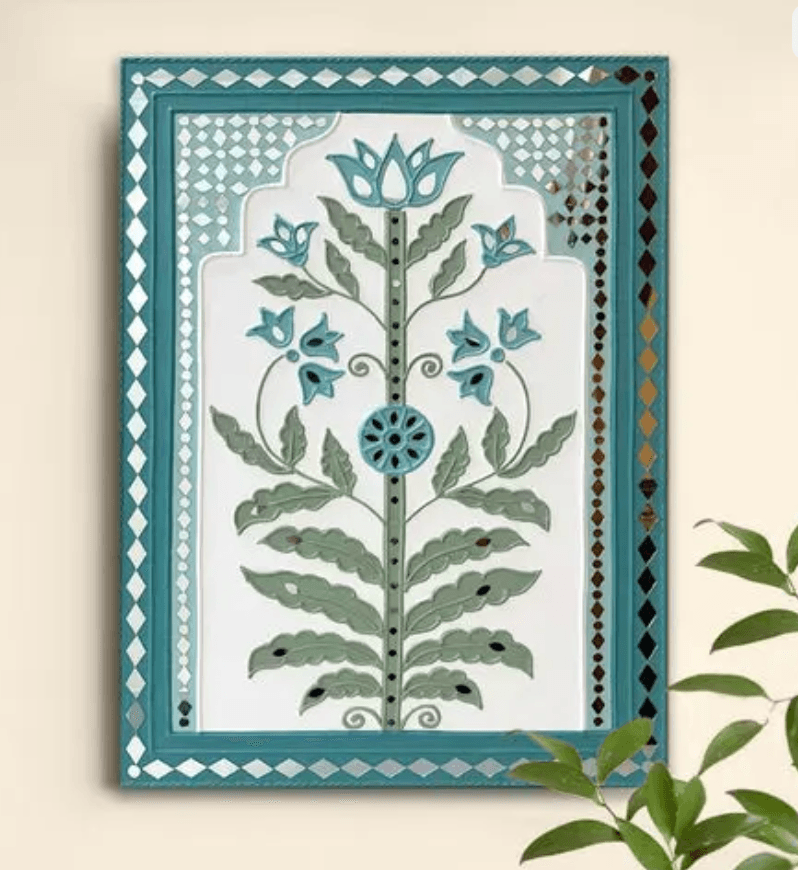
How to Choose the Right Lippan Art Size for Your Wall | Expert Sizing Guide
• By Richa Kumari
• 2026-01-02
How to Select the Right Bedsheet for Summer, Winter & Monsoon
• By Richa Kumari
• 2026-01-02
Frequently Asked Questions
Is cooking in brass utensils healthy?
Yes, as long as the utensil is properly tin-lined. The lining prevents food from reacting with the metal, making brass a safe and reliable choice for everyday Indian cooking.
Are brass utensils safe for milk?
Yes. Milk-based recipes like kheer, payasam, or boiled milk turn out well in brass because the metal heats slowly and evenly, reducing the risk of curdling.
Can brass cause toxicity?
Only if the tin lining wears off. exposed brass can react with acidic foods, which may make the dish unsafe. With regular kalai, brass remains completely safe.
Does brass leach into food?
A lined brass utensil does not leach significant minerals into food. The tin coating acts as a barrier and keeps cooking stable and safe.
Can you cook acidic food in brass?
No. Lemon, vinegar, curd, tomatoes, and tamarind should never be cooked in brass because they react with the metal if the lining is worn out.
Is brass good for gut health?
Yes. Brass supports gentle, slow cooking, which helps dishes become easier to digest and more soothing to the stomach.
 Free DeliveryAcross India
 100%Hand-crafted
 COD Available
 Easy Returns