




20 Different Types of Curtains: A Complete Guide to Styles & Uses
• By Anamika
• 2025-12-02
• 16 mins read
There are 20 main types of curtains commonly used in homes today - blackout curtains, sheer curtains, wave fold curtains, eyelet curtains, pinch pleat curtains, pencil pleat curtains, grommet curtains, rod pocket curtains, tab top curtains, tie-top curtains, goblet pleat curtains, box pleat curtains, single and double panel curtains, decorative curtains, cafe curtains, apron curtains, window-sill curtains, thermal curtains, and acoustic curtains. Each type serves a different purpose, from controlling sunlight and improving privacy to enhancing the room’s style and structure. This guide breaks down all 20 curtain types in detail so you can understand where they work best and how they can transform different spaces in your home.
Choosing the right curtain type can completely change how your room looks and feels whether you want more light, better privacy, a modern fall, or a decorative touch. If you’re planning to buy curtains for home online, understanding the different styles helps you make the right choice for each room. Below is a quick breakdown of the most popular curtain styles used in Indian homes and how they enhance different spaces.
1. Blockout Curtains
Blockout curtains are designed to significantly reduce sunlight entering a room without turning it completely dark. They help soften intense afternoon light, especially in west-facing rooms where heat and brightness can become overwhelming. These curtains are ideal for bedrooms if you prefer a dim, calm space during the morning hours but don’t want the pitch-black effect of blackout curtains. The thicker weave of blockout fabrics also helps improve insulation, making rooms feel cooler during hot days and slightly warmer during winter evenings. They add structure to windows because their weight gives them a defined fall that looks tidy even when partially opened. For homes near bright outdoor environments-like streetlights or busy residential complexes-blockout curtains are a practical upgrade that makes a noticeable difference in comfort.
2. Sheer Curtains
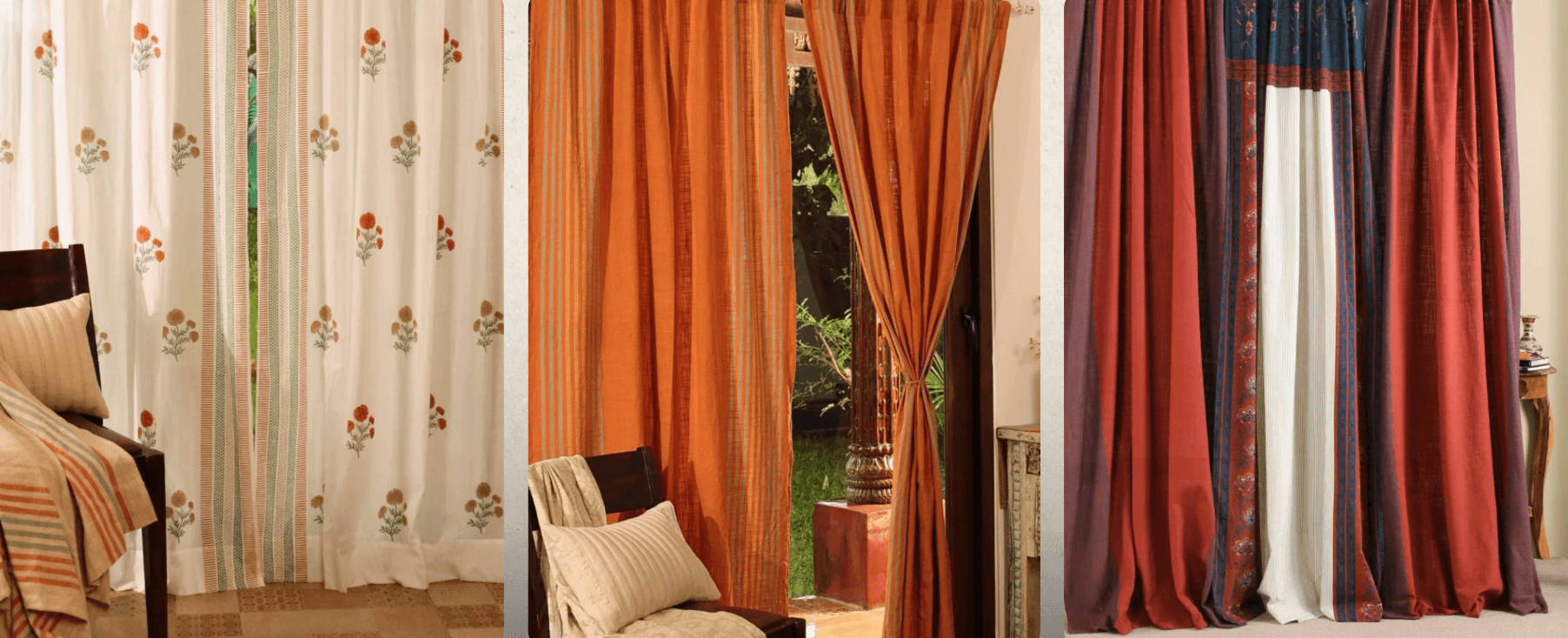
Sheer curtains are translucent fabrics that allow sunlight to pass through gently, creating a soft, glowing ambience. Unlike heavier drapes, sheers brighten the room while still providing partial privacy during the day. They are one of the most versatile curtain types because they work well in living rooms, dining spaces, and balconies-areas where natural light enhances the atmosphere. Sheers also pair beautifully with thicker curtains for nighttime privacy. A perfect example is Peepul Tree’s Pure Sheer Cotton Curtain in Rust, Mustard & Taupe (5 ft). Made from fine mulmul cotton, it diffuses light gradually and adds warm color tones that feel earthy and elegant. If your goal is to make a room feel open, breathable, and visually light, sheer curtains are an essential choice.
3. Wave Fold Curtains
Wave fold curtains (also known as ripple fold curtains) create smooth, continuous waves from end to end. The secret lies in the track mechanism that keeps the waves evenly spaced, giving the curtain a modern, sculpted look. Wave folds are popular in contemporary homes because they feel clean and minimal without losing softness. They work exceptionally well on tall windows, sliding doors, and wide living-room openings. Their biggest advantage is how effortlessly they glide-making them ideal for windows you access frequently, such as balcony doors. Wave fold curtains also look stunning in sheer fabrics, creating a soft architectural effect that elevates the entire wall.
4. Eyelet Curtains
Eyelet curtains have large metal rings punched into the top, allowing the curtain rod to slide smoothly through them. This gives the curtains a neat, modern fall with wide, uniform pleats. Eyelets are among the easiest curtains to handle daily because they move effortlessly and don’t require any special hardware. They suit almost every type of fabric-cotton, linen, polyester blends, or sheers. In homes where convenience matters as much as style, eyelet curtains are a go-to choice. They’re perfect for bedrooms, living rooms, and study areas where you frequently adjust the curtains depending on the time of day.
5. Pinch Pleat Curtains
Pinch pleat curtains have permanently tailored folds stitched at the top, creating a structured and elegant look. They require more fabric than standard curtains, giving them fullness and richness that works beautifully in formal or premium interiors. Pinch pleats pair well with medium-weight or heavy fabrics, but they also look refined in cotton, making them a versatile option for living rooms and dining areas. Because the pleats hold their shape consistently, the curtains always look tidy whether they’re open or closed. If your home décor leans towards classic, understated luxury, pinch pleat curtains will blend in effortlessly.
6. Pencil Pleat Curtains
Pencil pleat curtains feature thin, densely gathered folds that resemble a row of pencils lined up neatly. This heading style is extremely adaptable because it suits both traditional and modern homes. Pencil pleats create a soft, slightly casual look, making them a popular choice for bedrooms, guest rooms, and home offices. They drape elegantly in both lightweight cotton and slightly heavier fabrics. Pencil pleat curtains also work particularly well in homes where the curtain rod or track needs to be visually concealed, because the gathered heading naturally hides the hardware.
7. Grommet Curtains
Grommet curtains are similar to eyelet curtains but use metal rings that may vary in size, finish, or shape. These rings reinforce the fabric and add a contemporary metallic accent to the window. Grommet curtains move easily and maintain consistent folds, making them ideal for frequent use. They pair beautifully with solar-filtering fabrics and medium-weight cottons. Homes with a modern aesthetic-especially those with chrome or matte black curtain rods-tend to favor grommet curtains for their clean finish.
8. Rod Pocket Curtains
Rod pocket curtains have a stitched channel at the top where the rod slides through. This creates a soft, gathered effect that feels charming and slightly vintage. They’re best suited for windows where the curtains stay mostly closed, such as study nooks or decorative corners. While rod pockets offer an elegant drape, they’re not ideal for windows that require frequent adjustment because the rod doesn’t glide as smoothly. For lightweight fabrics, however, rod pocket curtains add a comforting, handmade touch that complements cozy home interiors.
9. Single Panel Curtains
Single panel curtains use one wide piece of fabric to cover the entire window. This creates a clean, uninterrupted surface that works especially well in minimal or modern homes. The simplicity of a single panel keeps the room visually calm and uncluttered. Single panels also help highlight artisanal fabrics or weaves because the eye sees one continuous expanse of material. A great fit for this style is the Handwoven Beige & White Cutwork Cotton Curtain (5 ft) from Peepul Tree-a semi-sheer fabric with delicate cutwork that adds handcrafted character without overpowering the room.
10. Double Panel Curtains
Double panel curtains consist of two fabric drops that meet in the middle. This traditional setup gives windows a balanced, symmetrical appearance while offering flexibility in how much light you let in. Double panels are ideal for large living-room windows, French doors, and tall balcony openings. They also make layering easier-you can use sheers for daytime and thicker drapes for nighttime. This classic configuration works for almost all window shapes and remains one of the most functional curtain types for Indian homes.
11. Statement Curtains
Decorative curtains emphasize design over function. Lace panels, sheer overlays, embroidered layers, and organza drapes fall into this category. These curtains frame the window beautifully and add texture and visual interest. They often work as a top layer over sheers or functional panels. Decorative curtains are ideal for spaces where aesthetics matter more than light control-like feature windows, creative corners, or accent spaces. They pair especially well with artisanal Indian motifs, soft pastels, and handcrafted accessories.
12. Cafe Curtains
Cafe curtains cover only the bottom half of the window, leaving the upper portion open for sunlight. This type originated in European cafés and is loved for its charming, cozy feel. Cafe curtains are ideal for kitchens, breakfast nooks, and areas where you need privacy at seated height while still allowing natural light from above. They work best with light cottons, linens, and small prints. In compact apartments or studio homes, cafe curtains also help prevent the space from feeling visually heavy.
13. Apron Curtains
Apron-length curtains fall slightly below the window sill. They create a neat, intentional look without touching the floor. This makes them great for spaces with radiators, desks, shelves, or lower furniture. Apron curtains are often used in nurseries, informal dining spaces, or casual bedrooms because they offer a dressed look without overwhelming the wall. A medium-weight cotton fabric works best here, giving the curtain enough body to fall neatly.
14. Window Sill Curtains
Window sill curtains end exactly at the sill, making them practical for kitchens, utility rooms, or any window above a countertop or cabinet. These curtains keep the space efficient and uncluttered while still adding softness to the room. Sill-length curtains are also ideal for small apartment rooms where maximizing floor space visually is important.
15. Tab Top Curtains
Tab top curtains feature fabric loops stitched into the top, which the rod slides through. These loops create a relaxed, handcrafted look that suits boho, earthy, and artisanal homes. Tab tops expose the rod, so the choice of curtain rod becomes an intentional part of the décor. These curtains pair beautifully with textured fabrics, handwoven cotton, or mulmul sheers. They also work well on shorter windows where visual simplicity matters.
16. Tie-Top Curtains
Tie-top curtains use fabric ties instead of loops or rings. They create a light, breezy look with soft gathers across the top. Tie-top curtains are ideal for informal rooms-bedrooms, balconies, creative corners-where softness and movement fit the mood. Their handcrafted feel pairs best with lightweight cottons and sheers. They’re also adjustable, allowing you to tie them higher or lower depending on how much sunlight you want.
17. Goblet Pleat Curtains
Goblet pleat curtains feature rounded, goblet-shaped pleats at the heading, giving them a sculptural and luxurious appearance. These curtains are perfect for formal living rooms, large dining areas, or homes with high ceilings. The structured pleats add drama and make the curtain itself feel like an architectural feature. Goblet pleats work best with heavy or medium-weight fabrics-velvets, jacquards, or rich cottons-because the fabric needs structure to hold the goblet shape.
18. Box Pleat Curtains
Box pleat curtains have evenly spaced rectangular pleats that fall in crisp, straight lines. This makes them ideal for modern, symmetrical spaces where clean lines dominate the décor. Box pleats create an organized, polished look, especially when paired with neutral cottons, fine linens, or minimal prints. They work especially well on tall windows or wide walls where the pleats become part of the architectural rhythm of the room.
19. Thermal Curtains
Thermal curtains include insulated layers or tightly woven fabrics that help regulate indoor temperature. They block heat during summer and conserve warmth during winter. Homes with large windows that receive direct sun benefit most from thermal curtains. They are also excellent in rooms where AC efficiency matters because they reduce heat transfer. Thermal curtains tend to be heavier but create a cozy, grounded feel that works well in bedrooms and living rooms.
20. Acoustic Curtains
Acoustic curtains are designed to absorb sound through dense weaves or layered materials. They help reduce outside noise from traffic, construction, or urban environments. Acoustic curtains are perfect for bedrooms, home offices, and media rooms where sound clarity and calmness are important. These curtains tend to be heavier and richer in texture, adding warmth to the room’s visual palette. Even though they are functional, layering them with sheers helps maintain an elegant aesthetic.
Curtain Styles & When to Use Them
Understanding curtain types is one part of the decision-making process; knowing when to use each style is equally important. Some curtains brighten the space, others add structure, others improve sleep or reduce noise. Here’s how to match curtain styles with real-life needs.
For Rooms That Need Brightness
Sheers, semi-sheers, and light cotton curtains work best. They enhance natural daylight and make the room feel larger and more open.
For Bedrooms
Blackout, room-darkening, or layered curtains offer restful lighting and privacy. Pair blackout curtains with sheers for daytime flexibility.
For Living Rooms
Use sheers for a bright, open feel and to soften strong sunlight. Wave-fold or pinch-pleat curtains work well if you want a neater, more structured look that still feels warm and inviting.
For Offices
Choose light-filtering or semi-opaque curtains that reduce glare and keep the space calm. Wave-fold or pencil-pleat styles maintain a clean, organised look suited for work environments.
For Tall Doors or Balconies
Door-length curtains provide movement and elegance. Peepul Tree’s Cotton Window & Door Curtain with Handblock Floral Border (5 ft / 7 ft) is a strong example-it adds definition without overwhelming the vertical space.
For Compact Windows
Semi-sheers or textured cottons help small windows feel softer without reducing light. Handwoven fabrics work especially well here.


Pure Cotton Door Curtain in 7ft |Navy Blue Colour | Gentle Machine Wash or Hand Wash | Chintz Collection - 7Ft / Pack of 2 / Navy

Curtain set of 2 Handwoven and 1 printed Curtain made with Pure cotton | Rust and Maroon | 7 Feet | Set of 3 Curtains

Curtain set of 2 Handwoven and 1 Printed Curtain made with Pure cotton | Blue and Dusty Pink | 7 Feet | Set of 3 Curtains

Sheer curtain Handprinted in Rust and Green Florals | Pure Cotton | Inspired from palaces of Rajasthan

Curtain set of 2 Handwoven and 1 Printed Curtain made with Pure cotton | Dusty Pink and Off-white | 7 Feet | Set of 3 Curtains

Curtain set of 2 Handwoven and 1 sheer Curtain made with Pure cotton and fine Mulmul| Green and Dusty Pink | 7 and 8 Feet | Set of 3 Curtains
You May also Like
Benefits of Choosing Eco-Friendly Home Decor
• By Anamika
• 2026-01-07
Why choose Handmade Products over Mass-Produced Products
• By Anamika
• 2026-01-07
Lippan Art vs Other Indian Wall Arts: Key Differences & Which Is Best for Your Home
• By Richa Kumari
• 2026-01-02
How to Choose the Right Lippan Art Size for Your Wall | Expert Sizing Guide
• By Richa Kumari
• 2026-01-02
How to Select the Right Bedsheet for Summer, Winter & Monsoon
• By Richa Kumari
• 2026-01-02
Frequently Asked Questions
1) Which curtain is best for a home?
It depends on your light and privacy needs. Sheers brighten living spaces, while room-darkening or blackout curtains suit bedrooms best. Cotton and mulmul curtains offer the best balance of functionality and aesthetics for most homes.
2) What is the most popular type of curtain?
Eyelet curtains are the most popular because they fall neatly and move smoothly. Sheer eyelets are widely used, while cotton pinch-pleat curtains offer a more refined, elegant alternative.
3) What is the current trend for curtains?
Natural fabrics, sheers, and artisanal textures are trending. Handwoven details, block-printed borders, earthy tones, and layered curtains (sheer + functional panel) are especially popular in premium Indian homes.
 Free DeliveryAcross India
 100%Hand-crafted
 COD Available
 Easy Returns