


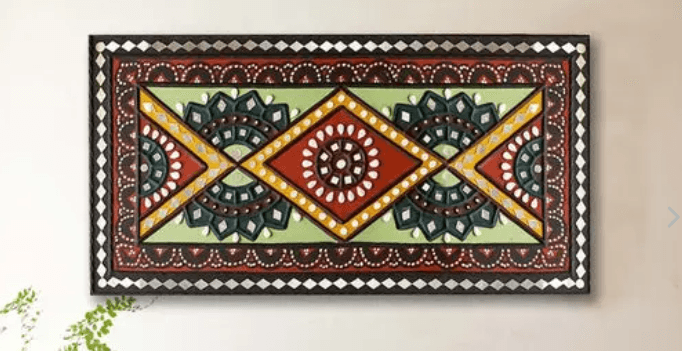


What Is Lippan Art? History, Types & Traditional Craft Explained
• By Anamika Choudhury
• 2025-12-22
• 19 mins read
Lippan art is a traditional mirror and clay mural craft from the Kutch region of Gujarat, created by hand using a mixture of mud, clay and tiny reflective mirrors. It is known for its raised patterns, earthy textures and shimmering mirror work that catch light beautifully. Rooted deeply in the architecture of the desert communities, Lippan was originally made on the circular walls of bhungas to decorate homes and enhance natural light. The craft relies on mud for structure and mirrors for brightness, creating artwork that is both functional and decorative. In simple terms, Lippan art is a unique blend of folk engineering, cultural storytelling and visual beauty that has been passed down for generations.
The History Behind Lippan Art
The history of Lippan art is closely tied to the everyday lives of pastoral communities who lived across Kutch centuries ago. Rather than emerging from royal patronage or temple traditions, this craft grew slowly within domestic settings, shaped by women who decorated their homes using the materials available around them. Over time, the motifs they created began to reflect memories, beliefs and social identity, turning simple wall-work into a visual archive of community life.
As families moved seasonally with their herds, the craft travelled with them, spreading from one settlement to another and evolving with each generation. For most of its history, Lippan remained undocumented, surviving purely through practice and repetition until cultural researchers and artisans began preserving it in the late twentieth century. Today, its continued revival is a testament to how a humble household craft evolved into one of India’s most recognisable folk art forms.
How Lippan Art Was Used Inside Traditional Kutch Homes?
In traditional Kutch homes, Lippan art was not just decoration. It played a practical role in daily living. The clay mixture kept the bhunga (circular houses ) walls cool in summer and warm in winter, making the space comfortable through extreme weather. Small mirrors helped brighten rooms by reflecting the light from a single lamp, which was often the only source of illumination. Families placed Lippan designs near doorways or pooja areas because they believed the motifs brought good luck and protection. The craft also helped repair small cracks in the walls, turning simple maintenance into a form of art.
Evolution of Lippan Art Through Community Traditions
Lippan art evolved differently across the communities of Kutch, each shaping the craft according to its beliefs, lifestyle and aesthetic traditions. Rabari women, known for their bold embroidery and vibrant textiles, brought the same expressive energy into their Lippan work, using large mirrors and strong motifs that celebrated daily life and folk identity.
The Mutwa community developed a more intricate style with fine lines, geometric precision and minimal figurative elements, influenced by Islamic artistic principles that favoured symmetry and non-figurative patterns. Marwada artisans leaned into earthy tones and animal symbolism, reflecting their pastoral roots and close connection to livestock. Over time, Lippan also became a part of weddings, festivals and seasonal rituals, with motifs chosen to represent blessings, fertility and renewal. Each community left a distinct fingerprint on the craft, turning Lippan into a tapestry of regional identities rather than a single uniform style.
Traditional Materials That Give Lippan Its Unique Character
Lippan art stands out because it is made entirely from natural materials that were part of everyday life in Kutch. Each ingredient had a purpose shaped by the desert climate, local architecture and the practical needs of the communities who created it. The craft was never about ornamentation alone. It was a functional response to heat, light and durability, and over time it came to symbolise identity and tradition. Understanding these materials reveals why Lippan feels so earthy, tactile and culturally rooted even today.
- Clay From Kutch Soil: Used as the base material because it was abundant, easy to mould and naturally insulating. Its flexibility allowed artisans to create coils, motifs and raised patterns directly on curved bhunga walls.
- Camel Dung as a Natural Binder: Mixed with clay to strengthen it, reduce shrinkage and prevent cracks. Its fibrous texture helped the artwork hold form in the harsh desert climate.
- Salt-Rich White Mud From the Marshlands: Provided Lippan art with its pale, luminous finish. It reflected sunlight, brightening interiors even with minimal natural light.
- Hand-Cut Mirrors (Aabhla): Added to capture and multiply light inside dimly lit homes. Mirrors also held cultural meaning, symbolising protection and positive energy.
- Natural Adhesives and Plant-Based Pastes: Used as gentle, sustainable binders strong enough to secure mirrors for years without damaging the clay.
- Traditional Surfaces: Bhunga Walls and Courtyards: The rounded mud walls created an ideal canvas, allowing motifs to flow smoothly without sharp edges. Doorframes and niches were also common surfaces for decorative panels.
Types of Lippan Art
Lippan art may look similar at first glance, but it exists in many styles. Each type comes from a different tradition, technique or purpose. Understanding these variations helps you appreciate the craft more deeply and choose the style that fits your home.
Here is a clear, easy breakdown.
1. Types Based on Craft Technique
- Traditional Mud Lippan This is the original form made on mud walls using clay, dung and mirrors. The designs have a warm, earthy look and feel handcrafted.
- White Lippan A modern favourite created using white clay. The clean colour gives it a calm, contemporary appeal while keeping the raised patterns.
- Mirror-Focused Lippan Some artworks use more mirrors and fewer clay details. These pieces sparkle beautifully and brighten dark corners of a room.
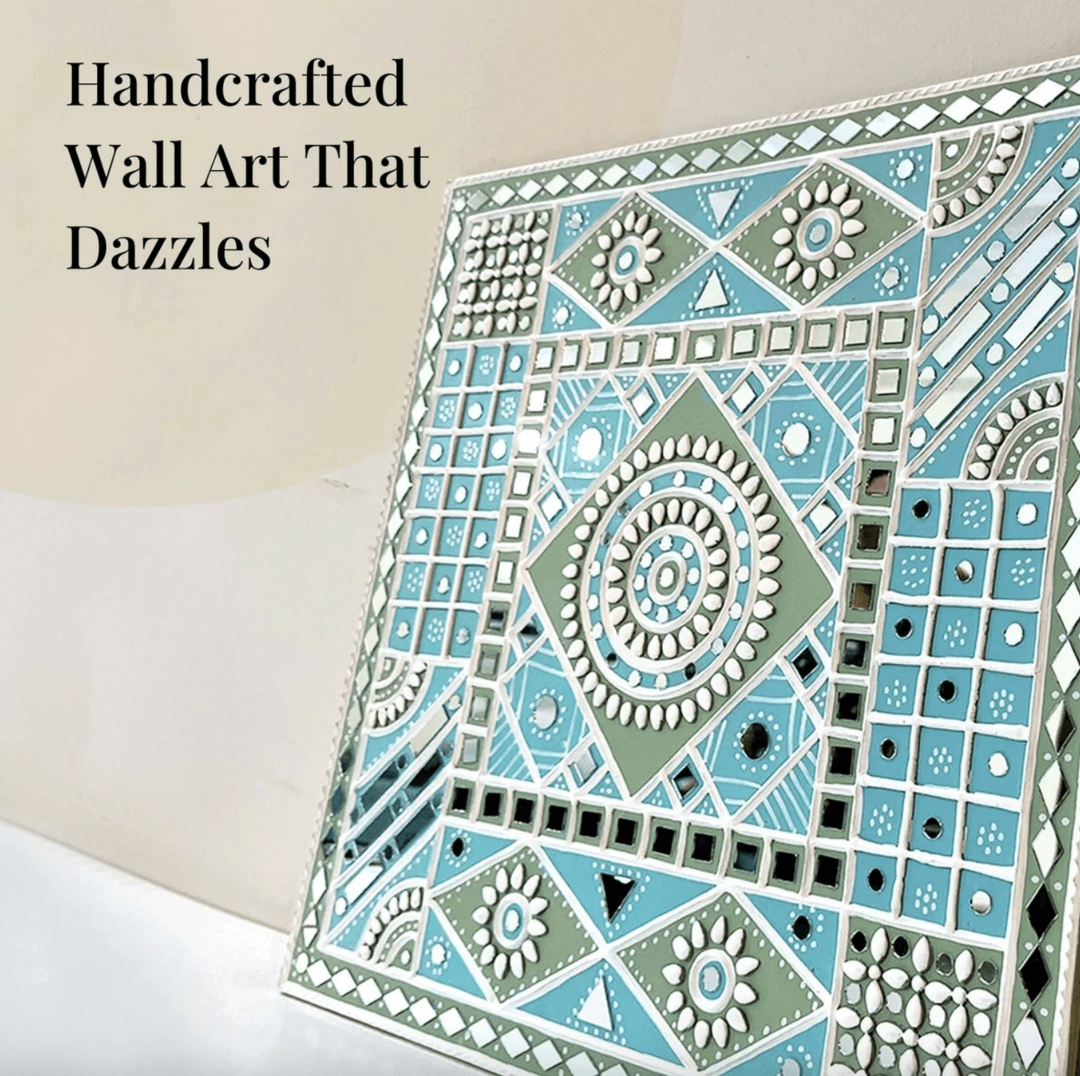
- Minimalist Contemporary Lippan Minimalist contemporary Lippan uses clean, simple geometric patterns that suit modern homes. These artworks keep the design subtle while still adding texture and shine. A fitting example is the Mud and Mirrors Wall Hanging in Red and Black from Peepul Tree, which brings a modern touch to traditional craft.
- Chalk-Powder or Sawdust Lippan (Workshop Style) Used in many craft workshops today. It replaces traditional materials with lightweight mixes so beginners can learn the technique easily.
2. Types Based on Community Styles
- Rabari Style Bold patterns, large mirrors and expressive motifs inspired by daily life and their textile traditions.
- Mutwa Style Known for delicate lines, precise geometry and fine detailing. Mirrors are smaller, and the designs feel very refined.
- Marwada Style Features earthy tones and animal symbols, reflecting the pastoral lives of the community.
3. Types Based on Where It Is Used
- Architectural Wall Murals Large designs made directly on exterior or interior walls of homes.
- Decorative Doorframes and Niches Traditional households used Lippan to highlight entry points and sacred corners.
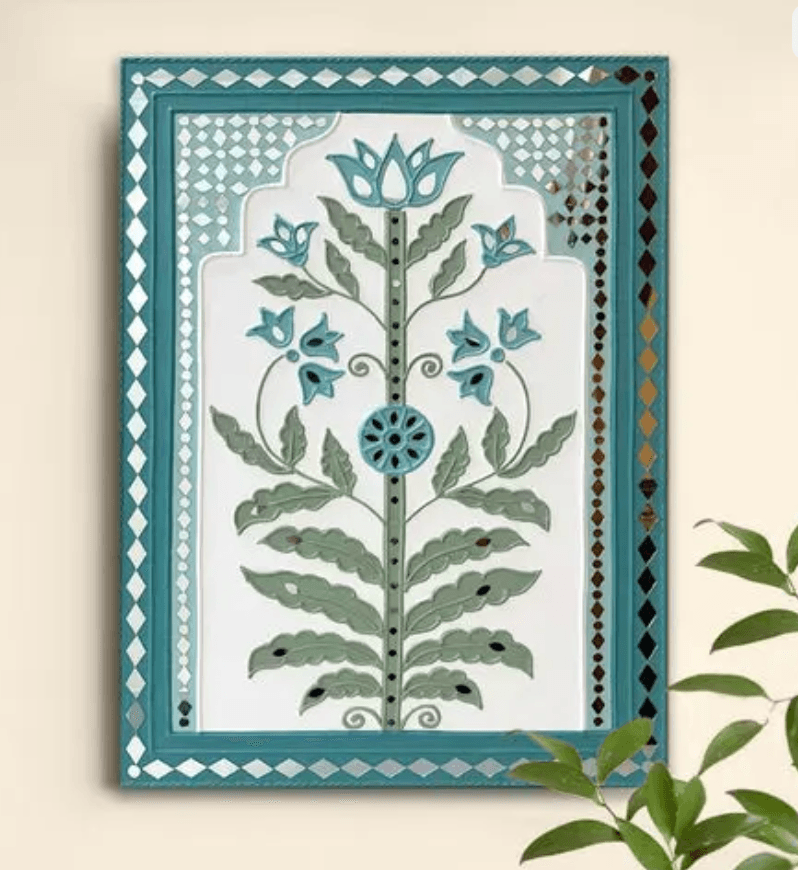
- Portable MDF Panels A modern innovation that allows Lippan to be framed and used in any room, without needing a mud wall.
- Religious and Pooja Room Motifs Motifs such as lotus, Om or Swastik are common for prayer spaces.
- Contemporary Art Panels Designed purely for decor, often blending traditional techniques with modern shapes.
- These traditional Lippan art designs revolve around geometric shapes, peacocks, camels, and floral motifs.
Motifs in Lippan Art and Their Cultural Meanings
Lippan art is filled with symbols that come from the daily lives, beliefs and surroundings of Kutch communities. These motifs were never random decorations. Each one carried meaning, reflected nature or expressed a hope for protection and prosperity. Understanding these symbols helps you see the craft as a form of storytelling rather than just ornamentation.
Below are the most common motifs and what they traditionally represent.
- Peacock: A symbol of joy, beauty and the arrival of the monsoon. The peacock appears often because rainfall shaped the rhythm of life in Kutch’s desert landscape.
- Camel: A reminder of desert identity and survival. The camel stands for endurance, strength and the nomadic history of the region.
- Elephant: Represents power, dignity and good fortune. Many families used elephant motifs near entrances for auspiciousness.
- Fish: Associated with prosperity and positive flow of energy. Even though Kutch is a desert, communities used fish motifs to express abundance and continuity.
- Trees, Leaves and Floral Patterns: These designs symbolise life cycles, growth and fertility. They also reflect the deep connection villagers had with the changing seasons.
- Circles and Mandalas: The circle is one of the oldest motifs in Lippan art. It signifies completeness, balance and cosmic harmony. Mandala-like patterns were often used in pooja areas for their calming effect.
- Geometric Patterns (Mutwa Style): Influenced by Islamic artistic traditions, these patterns avoid human and animal figures. Instead, they use symmetry and repetition to create quiet, meditative designs.
The Mirror Philosophy: Symbolism and Practical Purpose
Mirrors are the heart of Lippan art. They were not added for decoration alone. In the desert homes of Kutch, these tiny mirrors carried both practical value and cultural meaning. Their purpose shaped how families placed them on walls, doorways and pooja spaces.
Mirrors acted as light enhancers, especially inside circular bhungas that relied on a single oil lamp at night. The reflective surfaces helped spread light across the room, making small spaces feel brighter without needing extra fuel. This simple technique brought comfort and visibility in an environment where electricity was once limited.
Beyond function, mirrors held deep symbolic importance. Many communities believed that reflective surfaces kept away negative energy and brought positivity into the home. Placing mirrors near entrances was seen as a way to welcome good fortune while protecting the household. The shine of the mirrors was also associated with purity and clarity, making them a natural part of pooja areas and festive decorations.
In everyday life, mirrors also acted as small reminders of the surrounding landscape. Their sparkle echoed the brightness of the desert sun and the shifting colours of Kutch, turning each artwork into a living reflection of the place it came from.
The Rise of Lippan Art in Contemporary Interiors
Lippan art has seen a remarkable revival in recent years, moving from the mud walls of Kutch villages to modern homes across India and the world. What was once a humble folk craft is now appreciated as a cultural design element that adds both texture and personality to contemporary spaces. This renewed interest began as travelers and designers discovered the craft through cultural festivals like the Rann Utsav, where artisans showcased their work to a wider audience.
As awareness grew, people realised that Lippan art fits beautifully into today’s interiors. Its natural colours, raised patterns and shimmering mirrors complement a wide range of styles, from minimal and modern to rustic and bohemian. The growing movement toward sustainable and handcrafted decor has also played a big role. Homeowners now look for pieces that feel authentic and meaningful, which makes Lippan a natural choice.
Modern interpretations of Lippan often use white-on-white palettes and clean geometric shapes, making the craft feel timeless rather than traditional. At the same time, artisan groups and cooperatives have adapted the craft by creating portable MDF panels that can be used as wall art, mirror frames or decorative accents. This shift has made Lippan more accessible to urban buyers who may not have mud walls but still want to bring a touch of heritage into their homes.
Today, Lippan art stands at the intersection of tradition and modern design. It carries the soul of Kutch while fitting comfortably into apartments, villas and curated interior projects. Its rise is a reminder that handmade craft can continue to evolve without losing its authenticity - and that stories from the desert still have a place in the homes of a new generation.
Traditional Mud Lippan vs Modern MDF Panels
Lippan art exists today in two main forms: the traditional mud version made on walls and the modern MDF panel version created for easy home decor. Both have their own strengths, and understanding the difference helps buyers choose what fits their space and lifestyle.
Traditional mud Lippan stays closest to the original craft. It is made using clay, dung and hand-cut mirrors directly on bhunga-style walls. The texture feels earthy, slightly uneven and full of natural character. Because it is crafted on-site, each piece becomes part of the architecture. However, it can be delicate and may develop cracks over time, especially in humid areas. Maintenance needs more care, and installation is not always practical for city homes.
Modern MDF Lippan panels were developed to make the craft accessible to more people. Artisans still hand-shape the coils and set the mirrors, but instead of applying the work on walls, they build it on MDF boards that can be hung like paintings. These panels are lightweight, durable and suitable for apartments. They carry the same visual charm while fitting more easily into modern living spaces.
Below is a simple comparison to make the choice clearer:
Materials: Traditional uses clay and dung; MDF uses engineered wood with clay or chalk-based mixture.
Weight: Traditional is heavy and fixed; MDF is light and portable.
Durability: Traditional can crack in humidity; MDF is more stable indoors.
Appearance: Traditional has a raw, earthy charm; MDF offers a clean and polished look.
Cultural authenticity: Traditional is closest to the original craft; MDF adapts the style for modern homes.
Maintenance: Traditional needs gentle care; MDF is easier to clean and move.
Usage today: Traditional fits heritage-style homes or on-site installations; MDF works well for living rooms, bedrooms, hallways and offices.
Both forms honor the craft in their own way - one preserves the old-world feel, and the other brings Lippan into the everyday homes of a new generation.
How Lippan Art Supports Rural Artisan Communities?
Lippan art is more than a beautiful wall piece; it is a source of livelihood and pride for many rural families in Kutch. Today, this same expertise helps them earn a stable income while keeping their cultural identity alive.
Many artisans work seasonally, as desert climates shape their routines. During the cooler months, they create panels and artworks that are later sold through local groups, cooperatives and online platforms. This income supports their households, especially in regions where job opportunities are limited. NGOs, design institutes and craft organisations have played a major role in reviving Lippan by offering training, helping with tools and connecting artisans to larger markets.
Younger artisans are now returning to the craft because they see real value in it - not just as heritage, but as a sustainable career path. Ethical buying also matters. When customers choose authentic handmade pieces, they directly support these families, encourage fair wages and strengthen the future of the craft.
Lippan art has travelled from mud homes in Kutch to modern houses around the world, and every purchase helps keep this legacy alive.
How to Identify Authentic Handmade Lippan Art?
Authentic Lippan art has small details that immediately show it was shaped by hand rather than manufactured. One of the first signs is texture. Real clay work has gentle variations, slight unevenness and natural curves that come only from hand-rolled coils. Machine-made pieces often look too perfect or flat. You can also check the mirrors. Handmade Lippan uses small aabhla mirrors that are not always uniform in size, while replicas use identical, factory-cut pieces.
Look closely at the surface. Authentic mud or mud-based panels have an earthy feel and a mild natural scent, while synthetic versions feel smooth and plastic-like. In handmade pieces, the pattern may show minor irregularities, which is part of their charm. These irregularities prove the artisan shaped each section with intention rather than stamping it out.
Weight is another clue. Traditional mud pieces are slightly heavier, whereas MDF-based artwork is lighter but still crafted by hand when made by artisans. Very lightweight panels with printed textures are usually mass-produced copies. Some artisans also leave subtle signatures, symbols or initials on the back, which can confirm authenticity.
Price can guide you as well. True handmade Lippan takes many hours of skilled work, so extremely cheap pieces are likely replicas. Buying from trusted craft platforms, artisan groups or certified sellers ensures you receive genuine craftsmanship.
Authentic Lippan should feel alive, textured, imperfect in the best way, and rich with the effort of human hands.

Handmade Mud Art Sparkling Festive Hangings- 4.5" Dia- set of 02 - Set of 2

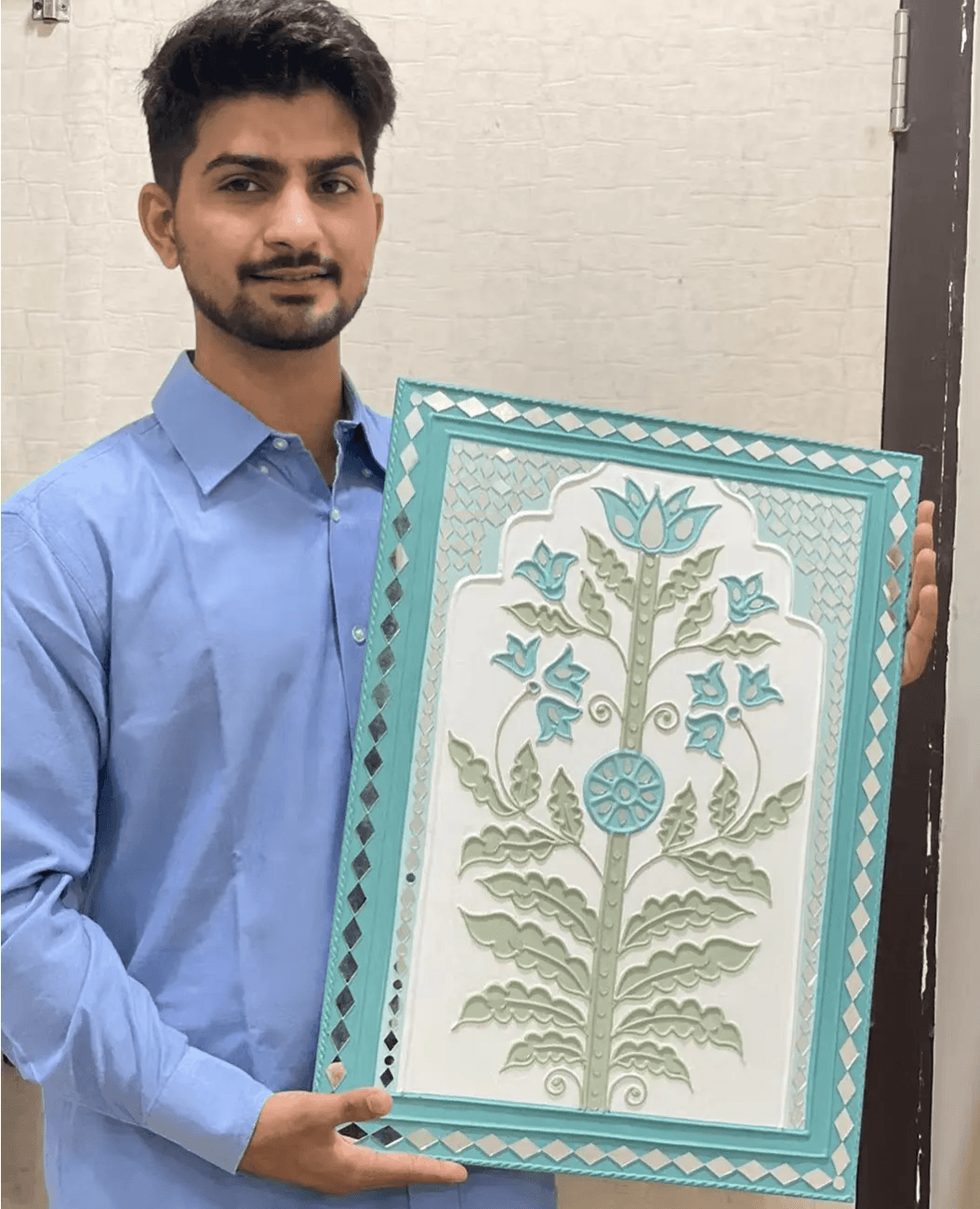
Blue Sparkle Handmade Mud Art Wall Hanging - 16 inches X 22 inches / Clay & Mirrors on Ply / Persian Blue & White

Bright Brick Red Handcrafted Mud Art Mirror - 14 inches X 14 inches / Clay & Mirrors on Ply / Brick-Red

White Sparkles Hut Inspired Mud Decor Mirror - 14 inches X 14 inches / Clay & Mirrors on Ply / White

Handmade Wall Hanging in Ocean Blue | Lippan Home Decor | Mud Art - 18 inches X 12 inches / Clay & Mirrors on Ply / Ocean-blue & White

Round Pink Handcrafted Mud & Mirror Work Wall Art (Set of 2) - 6 inches diameter / Clay & Mirrors on Ply / Pink
You May also Like
Benefits of Choosing Eco-Friendly Home Decor
• By Anamika
• 2026-01-07
Why choose Handmade Products over Mass-Produced Products
• By Anamika
• 2026-01-07
Lippan Art vs Other Indian Wall Arts: Key Differences & Which Is Best for Your Home
• By Richa Kumari
• 2026-01-02
How to Choose the Right Lippan Art Size for Your Wall | Expert Sizing Guide
• By Richa Kumari
• 2026-01-02
How to Select the Right Bedsheet for Summer, Winter & Monsoon
• By Richa Kumari
• 2026-01-02
Frequently Asked Questions
Is Lippan art durable for long-term use?
Yes, both traditional mud Lippan and modern MDF Lippan are durable when kept away from moisture. With basic cleaning and proper placement, they last for many years.
Can real mud Lippan crack over time?
It can, especially in very humid or shifting climates, because natural clay expands and contracts. However, small cracks are normal and part of its handmade character.
How do I clean Lippan art without damaging it?
Use a soft dry cloth or a gentle brush to remove dust. Avoid water or liquid cleaners, as these can affect the clay surface or loosen the mirrors.
Can Lippan art be used outdoors or in balconies?
Only if the area is covered and protected from direct rain or moisture. MDF and mud pieces should always be kept in dry conditions to prevent damage.
 Free DeliveryAcross India
 100%Hand-crafted
 COD Available
 Easy Returns