




Rug Shedding & Pilling: Causes, Fixes & How to Make Your Rugs Last Longer
• By Richa
• 2025-12-02
• 18 mins read
Rugs are supposed to make a home feel warm, lived-in, and visually balanced. But the moment you start seeing loose fibres on the floor, fuzz clinging to your clothes, or tiny balls of tangled fibre collecting on the surface, it’s easy to feel like something is wrong with the rug. The truth is far more reassuring: most shedding and pilling is normal, completely fixable, and often a sign that your rug is made from real, natural materials instead of plastics. The key is understanding why it happens, how long it lasts, and what you can do to keep your rug looking fresh for years.
What Is Rug Shedding?
Rug shedding is the natural release of loose fibres from the surface of a rug. These fibres are not damaged threads or signs of poor quality; they are simply short ends and surface-level strands that were left behind during spinning, weaving, or trimming. When you walk over the rug, vacuum it, or even brush against it, these tiny fibres detach and rise to the surface.
Shedding is most visible in new rugs and in rugs made from plush or natural materials like wool or cotton. Over time, as the surface fibres settle and the weave stabilises, shedding reduces significantly. Think of it as the rug adjusting to your home softening, settling, and slowly revealing its true texture and character.
What Is Rug Pilling?
Rug pilling refers to the formation of small, round fibre clusters, tiny balls or “pills” that sit on the surface of the rug. These pills are made of short, loose fibres that twist together when they come in contact with movement or friction.
Pilling is a surface behaviour, not a structural flaw. The main body of the rug stays intact while only the very fine, short strands gather into soft little balls. It’s similar to what happens with woollen sweaters or cotton upholstery: the fibres on top curl into small knots, but the fabric beneath remains strong and unaffected.
Over time, pilling can be managed or removed, and once the excess fibres are gone, the rug maintains its smooth, clean texture with normal use.
What Causes Rug Shedding & Rug Pilling?
Rug shedding and pilling are natural fibre behaviours, but the triggers behind them are often misunderstood. Shedding happens when loose fibres left over from spinning, weaving, or trimming work their way to the surface. Almost every handmade or natural-fibre rug experiences this in the beginning. Wool rugs shed because of their scaly fibre structure, while cotton or jute rugs shed when the yarn rubs against itself during movement.
Pilling, on the other hand, is slightly different. It occurs when short, broken fibres twist together into tiny balls due to friction. This friction might come from foot traffic, dragging furniture, pets running across the rug, or even a high-powered vacuum.
Rug construction influences shedding more than the material itself. A tightly woven flatweave has very few loose fibres, while tufted rugs with softer yarn can shed for months. Even well-made handwoven rugs may release surface lint initially because any natural fibre adjusts to movement, pressure, and cleaning routines.
Humidity also accelerates both shedding and pilling. Fibres soften slightly in moist climates, making them more prone to breakage. High-traffic rooms living rooms, corridors, under dining chairs experience more fibre stress than bedrooms or pooja rooms. Materials react differently too: wool pills more, jute frays at the edges, cotton releases light lint, and synthetic blends pill when exposed to friction.
In short, shedding and pilling don’t mean a rug is damaged. They’re part of the break-in journey, just like a new pair of leather shoes softening with use. The key is knowing when this behaviour is normal and when it’s a sign of poor fibre quality or weak construction.
Rug Shedding Fix: What Actually Works to Control Shedding?
Fixing rug shedding is less about stopping it instantly and more about helping the fibres stabilise so the rug settles into its long-term form. The most effective fix begins with replacing aggressive cleaning habits with gentler, fibre-safe techniques. Instead of vacuuming with force or using rotating brushes, switch to suction-only cleaning. This removes dust without disturbing the yarns. For handwoven or flatweave rugs, using a handheld carpet brush in the direction of the weave often works better than any vacuum because it lifts surface lint without tugging at the structure.
Snipping stray fibres with small scissors is another essential fix: never pull them. Pulling tugs at the neighbouring threads can trigger even more shedding. If your rug is shedding because the fibres feel soft or limp, humidity may be the hidden reason. Moist climates make natural fibres loosen faster, so keeping the rug in a ventilated room or running a dehumidifier can significantly slow down shedding.
For a more advanced fix, fibre setting works extremely well. Hovering a steamer 10-12 cm above the surface or pressing the rug lightly using an iron over a cotton sheet helps the fibres lie flat and interlock more tightly. This “sets” the pile and reduces surface shedding in the weeks that follow. Over time, consistent gentle care helps shedding decrease naturally as the loose fibres release and the rug settles into its permanent texture.
Rug Shedding After Vacuum - Why It Happens & What to Do?
Vacuuming often makes rug shedding look worse, but the shedding isn’t caused by damage it’s caused by how the vacuum interacts with surface fibres. When you vacuum a new or natural-fibre rug, the suction lifts loose, unanchored fibres that were already present from the weaving and trimming process. If your vacuum uses a beater bar or spinning brush, the friction intensifies and pulls out fibres that would have naturally surfaced over several weeks. This gives the illusion that the rug is “shedding more” after vacuuming, when in reality the vacuum is simply accelerating the break-in phase.
Another overlooked reason is vacuum strength. High suction settings create turbulence that agitates the pile, especially in wool, cotton, or soft-blend rugs. Vacuuming too frequently, or going over the same patch multiple times, also exaggerates shedding because the fibres don’t get time to settle between sessions. Even lifting the rug edges while vacuuming can loosen corner yarns that weren’t meant to be disturbed.
To minimise shedding while still keeping the rug clean, switch to suction-only mode (no rotating attachments), vacuum along the direction of the weave, and limit deep cleaning during the first two to three weeks. Light, spaced-out vacuuming helps your rug stabilise, and once the initial fibre release is over, shedding drops significantly. It’s about technique, not frequency gentle, controlled vacuuming preserves the rug’s lifespan.
Rug Refresh Tips: How to Make Your Rug Look New Again?
Refreshing a rug is different from cleaning it; it's about restoring its appearance, reviving its fibres, and giving it a lifted texture that feels new again. Most rugs don’t need water washes or heavy shampooing; instead, they benefit from simple routines that support fibre health. A good refresh starts with airflow. Take the rug outdoors and shake it lightly to release compacted dust. Let it breathe in soft shade or mild sunlight for 30-40 minutes this natural airing removes odours, reduces humidity trapped in fibres, and tightens the weave slightly.
Once the rug is aired out, groom the surface. Use a soft-bristle brush or your palm to coax the fibres back into alignment. Brushing gently in multiple directions helps reopen flattened areas, especially under furniture. For rugs with piles, a quick steam hover (keeping the steamer 10-12 cm above the surface) reactivates the fibres and lifts depressions without soaking them. This technique is safe for cotton, wool, and most handmade flatweaves. Avoid contact steam. Steam touching the rug directly can over-moisten the fibres.
If the rug smells stale or has absorbed indoor humidity, sprinkle baking soda lightly and let it rest for an hour before vacuuming on low suction. This removes lingering odours and adds instant freshness. A rug refresher spray (made for fabrics, not carpets) can also lightly mist the surface for added softness. Refreshing isn't about deep cleaning; it’s about maintaining the look, bounce, and vibrancy of the rug between washes and for most natural rugs, refresh cycles are far healthier than frequent wet cleaning.
How to make rugs last longer?
A rug’s lifespan depends far less on the material and far more on how it’s treated at home. Most people assume rugs age because of foot traffic, but in reality, it’s the combination of friction, moisture, weight distribution, and cleaning habits that cause early wear. The simplest habit that extends a rug’s life is rotation. When a rug stays in one orientation for years, one side bears all the sunlight, all the footsteps, and all the furniture pressure. By rotating it every three or four months, you distribute the wear evenly so the rug ages gracefully instead of developing one dull, patchy corner.
Using a rug pad underneath is another longevity secret most households underestimate. Pads reduce friction between the rug and flooring, provide shock absorption when someone walks, prevent slipping, and stop the fibres from stretching out of shape. They also protect the rug from dust buildup beneath, which can slowly grind against fibres and weaken them.
Furniture is another culprit. Constant dragging or uneven pressure leaves dents in the weave. Instead of pushing heavy pieces across the rug, lift and reposition them. If you place a rug under a sofa or table, try adjusting the legs slightly once or twice a year, so the rug fibres don’t stay compressed in the exact same place.
Seasonal behaviour matters too. Rugs last longer when protected from harsh Indian conditions, summer dust, monsoon humidity, winter hardness. Storing rugs upright, not folded, during interior painting or renovation also prevents creases. When you treat your rug like a textile that breathes, settles, and reacts to your home environment, it naturally lasts longer.
How to Remove Rug Pills Safely at Home?
Removing pills is delicate work, but very manageable. The goal is to remove the fibre balls without disturbing the rest of the pile. A fabric razor, the same tool used for sweaters works best when used gently. Gliding it over the surface lifts pills and preserves the weave beneath. For larger pills, using small scissors works just as well, provided you trim only the pill and not the fibre beneath it.
Some people pull pills by hand, but this is risky because it may tug at the base fibres. It’s better to cut than pull. After removing pills, brushing the rug lightly with a soft brush restores the uniform surface texture. You can also use a lint roller for lighter rugs, especially cotton flatweaves, where small surface fuzz is normal.
For rugs with delicate fibres like viscose or blends, pilling removal should always be conservative a light hand and minimal passes are enough.
When Should You Replace Your Rug Instead of Repairing It?
A rug rarely needs replacement just because of shedding or pilling. These issues are almost always manageable through trimming, gentle vacuuming, brushing, or rotating. But there are moments when a rug has reached the end of its natural lifespan and repair becomes more effort than value.
The most obvious sign is when the rug begins thinning in large patches. If the base weave becomes visible or the pile looks uneven despite gentle grooming, the fibres may have weakened beyond repair. Persistent shedding that increases instead of decreasing over time usually indicates compromised yarn quality or adhesive breakdown (especially in tufted rugs). Another red flag is structural damage, edges unraveling, backing separating, the rug losing shape, or sections becoming lumpy.
Moisture damage is particularly hard to reverse. If a rug has absorbed water over a long period, leading to mildew, smell, stiffness, or colour bleeding, cleaning may not restore it. Rugs used in high-moisture areas like bathrooms or kitchens wear faster anyway.
You should also consider replacement when the rug no longer performs its intended function. For example, if a living room rug becomes too thin to offer comfort, or a bedside rug feels rough due to fibre breakdown, it stops adding value to the space. Often, replacing an old rug gives your room a fresh visual reset, especially when upgraded to durable handwoven pieces like Peepul Tree’s cotton and block-printed designs.
The rule of thumb: if a rug creates more work than comfort, or if its structural integrity is compromised, it’s time to retire it gracefully.
How to Choose the Right Rug to Avoid Excessive Shedding?
Shedding is heavily influenced by what you buy and how the rug is made. Choosing the right material, weave, and thickness determines how your rug will age.
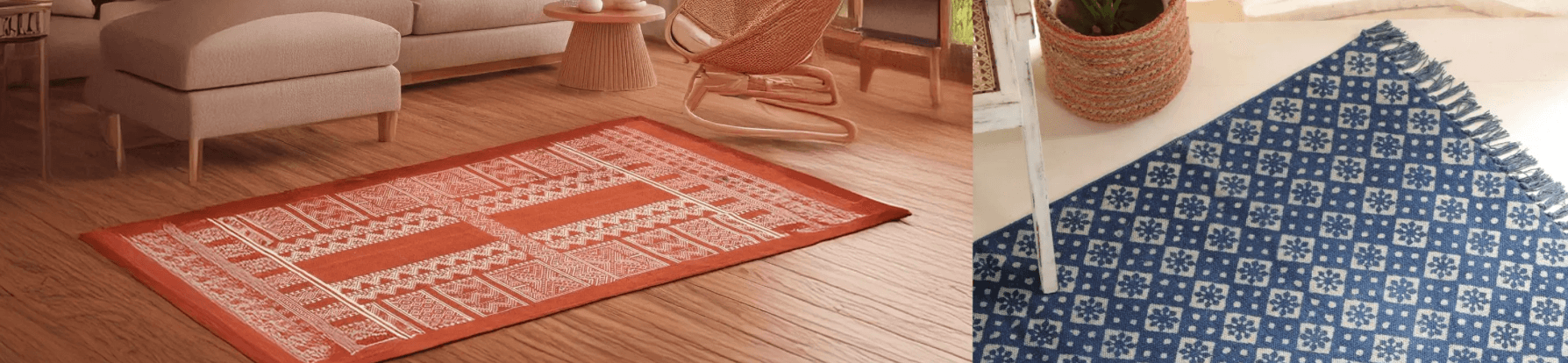
For minimum shedding, go for tightly woven flatweaves made from cotton or jute. These constructions release very little fibre because the yarn is pulled taut during weaving. Hand-woven cotton carpets like Peepul Tree’s Indigo Block-Printed Rug are ideal for homes seeking low-maintenance options. The dense weaving locks the fibres in place, ensuring the rug remains stable even with daily foot traffic. Similarly, natural cotton rugs with printed details, such as the Ivory & Rust Cotton Rug, shed lightly at first but stabilise quickly because the yarn is not fluffy or loose.
Avoid fluffy yarns, thick shaggy piles, or machine-tufted rugs with synthetic backings if shedding bothers you. These constructions inherently trap loose fibres and release them frequently. Also consider the rug’s purpose. For high-traffic areas, choose flatweaves or dhurries. For bedrooms, soft cotton rugs are perfect because they give comfort without excessive fibre movement.
Look closely at the rug's edges. Tight finishing reduces fraying. Natural dyes shed less than chemical washes. And always check for reputable handwoven craftsmanship. Handmade rugs, even cotton, perform better because artisans interlock fibres more securely than machine processes.
Choosing the right rug isn't about avoiding shedding entirely; some shedding is natural. It's about choosing a weave and material that settles gracefully rather than constantly releasing fibre.
Low-shedding rug options
If you prefer minimal shedding and want something long-lasting, flatweave cotton rugs, handwoven jute rugs, and low-pile synthetics remain the safest choices. These are especially reliable for Indian homes dealing with dust and humidity, making them ideal picks if you're planning to buy rugs online in India. Flatweave cotton rugs are among the most stable; they're tightly woven, have no pile to loosen, and maintain a clean surface even in busy rooms. Handwoven jute rugs are another low-shedding option because jute fibres are longer and sturdier, making them less prone to breaking. Synthetic blends like polypropylene and recycled PET also shed minimally because they’re engineered for durability, though they lack the organic feel of natural fibres.
Wool tends to shed more, but high-quality, long-staple wool (often used in premium hand-knotted rugs) behaves very differently. It may shed initially, then stabilises over time. Machine-made low-pile rugs also provide a great alternative for anyone who loves softness but doesn’t want heavy upkeep.
The safest low-shedding picks, especially for Indian homes with dust and humidity, are:
• Flatweave cotton rugs • Handwoven jute rugs • Low-pile synthetics • High-knot-count wool rugs
If shedding is your top concern, avoid viscose, chenille, and loosely tufted rugs they shed the fastest and react poorly to foot traffic.

Handprinted Cotton Rug In Teal | Floor Rugs | Handmade In India - 3 x 5 Feet / Cotton / Teal

Cotton Rug for living room hand printed in Jaipuri honey mustard design | Cotton | Floor rug

Handcrafted Kalamkari Print Cotton Rug with a Floral Pattern - 5 ft X 3 ft / Pure Cotton / Multicolor

Cotton Rug Hand Block Printed in Ivory and Rust Colour | Soft Washable and Durable Carpet for Living Room or Bedroom

Indigo Cotton Block Printed Rug In 3 x 5 ft | Geometric Print | Handcrafted In India - 3 x 5 ft / Cotton / Indigo
You May also Like
Benefits of Choosing Eco-Friendly Home Decor
• By Anamika
• 2026-01-07
Why choose Handmade Products over Mass-Produced Products
• By Anamika
• 2026-01-07

Lippan Art vs Other Indian Wall Arts: Key Differences & Which Is Best for Your Home
• By Richa Kumari
• 2026-01-02
How to Choose the Right Lippan Art Size for Your Wall | Expert Sizing Guide
• By Richa Kumari
• 2026-01-02
How to Select the Right Bedsheet for Summer, Winter & Monsoon
• By Richa Kumari
• 2026-01-02
Frequently Asked Questions
1) Are jute rugs durable?
Yes jute rugs are strong and long-lasting when used properly in dry indoor spaces. Their thick fibres handle everyday foot traffic well, but they should be kept away from moisture to prevent weakening.
2) How do I know if my rug is shedding normally?
If shedding decreases over time, appears mainly as light fuzz, and does not affect the rug’s thickness, it’s normal. Only clumping, thinning patches, or heavy fibre loss signal a problem.
3) Can vacuuming damage my rug?
Only if you use a beater bar or very strong suction. Use suction-only settings for wool, jute, and cotton rugs. Always avoid vacuuming the fringes.
 Free DeliveryAcross India
 100%Hand-crafted
 COD Available
 Easy Returns