




What Is a Jute Rug? Natural Fiber, Benefits & Cleaning Tips
• By Anukriti Mishra
• 2025-12-02
• 12 mins read
A jute rug is a floor covering made from the soft, golden fibres of the jute plant, a natural material that has been used in Indian homes for centuries. It is known for its earthy warmth, rich texture, and ability to instantly ground a space. Unlike synthetic rugs, jute has a naturally sun-kissed tone that blends seamlessly with most décor styles, from modern minimalism to boho-inspired interiors. The reason people gravitate toward jute rugs is simple: they offer the comfort of a natural fibre with a style quotient that feels both effortless and elevated.
They bring a cosy, organic vibe into the home while still looking intentional and stylish. Whether placed in a living room, bedroom, or entryway, a jute rug adds texture, depth, and that unmistakable touch of nature that modern Indian homes love. If you're exploring bedroom rugs online that bring warmth and a natural, grounded look, jute rugs are one of the most versatile options for cosy interior styling.
Jute Rug Pros and Cons
Jute rugs come with a mix of qualities that make them highly desirable and a few that require care.
Pros
Jute rugs are naturally soft underfoot, making them comfortable for everyday living. Their neutral beige-gold tone works beautifully with all kinds of colour palettes, warm earth tones, modern greys, deep greens, or pastels. They are also eco-friendly, biodegradable, and a responsible choice for people who prefer sustainable home décor. The tight handwoven texture gives them excellent visual depth, making them perfect for adding character to monochrome or minimalist spaces. Another plus is their durability in dry spaces; jute fibres can withstand regular foot traffic and still look refined for years.
Cons
Because jute is a natural fibre, it is sensitive to moisture. Water exposure can cause staining or lead to mould in very humid environments. Jute rugs also tend to absorb spills quickly, so they require prompt cleaning. Over time, some fraying at the edges may occur, a natural characteristic of handwoven plant fibres. And while they are strong, they are not recommended for kitchens, bathrooms, or outdoor spaces where water contact is frequent. With the right placement and care, however, jute rugs can last beautifully and remain one of the most stylish choices for home interiors.
Jute vs Cotton Rug
Jute and cotton rugs may seem similar because both use natural fibres, but they behave very differently in a home. A jute rug has a thicker, coarser weave that adds bold texture, making it perfect for grounding a space. Cotton rugs, on the other hand, feel softer and are easier to wash, making them great for bedrooms, kids’ rooms, or spaces where frequent cleaning is needed.
Jute is more durable under daily use, especially in living rooms or entryway corners, while cotton fares better in low-traffic or moisture-sensitive spaces. Cotton rugs come in more prints and colours, while jute tends to shine for its organic, earthy appearance. For homes that value craftsmanship, both fibres complement each other beautifully. For instance, the Handwoven Bold Monochrome Rug adds visual structure with its deep texture, while the Handwoven Clover Green Carpet blends softness and artisanal weaving showing how Peepul Tree balances both natural materials with distinctive aesthetics.
How to Clean Jute Rug?
Cleaning a jute rug requires a gentle approach because the fibre is absorbent and should not be drenched with water. Begin by shaking the rug outdoors once a week to remove loose dust. For deeper cleaning, use a vacuum with a brush attachment to lift dirt without pulling on the weave.
If something spills, blot immediately using a dry cloth, do not rub or add water. Sprinkle baking soda on oily stains to absorb moisture, then vacuum after 20-30 minutes. For long-term care, keep the rug away from damp corners, leaking windows, or areas where shoes come in wet. If you need professional cleaning, choose dry-clean methods only. With a little routine care, a jute rug stays fresh, clean, and crisp for years.
Jute Texture The Natural Look and Feel
The beauty of a jute rug lies in its unmistakable natural texture. The fibre has a matte, earthy surface with subtle variations that make every piece look unique. Jute feels warm underfoot yet sturdy enough to anchor furniture. Its braided or handwoven patterns enhance visual movement in a room and add richness without overwhelming the décor.
This richness in texture is why jute rugs are widely used in modern Indian homes to balance smooth flooring materials like marble, vitrified tiles, or polished wood. The natural golden-brown tones bring a sense of comfort and grounding, turning the floor into a canvas of understated luxury.
Why Are Jute Rugs So Popular?
Jute rugs continue to top décor trends each year because they bring together utility, beauty, and sustainability. Their neutral palette blends into any décor style, reducing visual clutter and making spaces feel calm and cohesive. Jute’s affordability compared to other natural fibres also adds to its popularity.
Another reason is the shift toward natural materials. Homeowners now prefer earthy, breathable and low-tox home furnishings and jute aligns with that mindset perfectly. The rise of boho, Scandinavian, and Japandi interiors has also made jute rugs an essential décor element because they bring that much-needed warmth and grounding to clean-lined spaces.
Styling Jute Rugs Across Your Rooms
Jute rugs work wonderfully in living rooms where they help zone conversations areas and create a cosy, layered foundation under sofas and accent chairs. In bedrooms, they soften the flooring visually and make the space feel warm and inviting. Entryways benefit from jute rugs because they add character the moment someone steps inside.
You can use them under coffee tables, in reading corners, under dining tables (if spills are minimal), or as grounding layers beneath patterned rugs. In larger rooms, layering a printed cotton rug over a large jute base creates a designer-style composition. Whether your home leans traditional or contemporary, jute fits in seamlessly due to its soft, earthy presence.
The Classic Appeal of Jute Rugs
Yes, jute rugs are timeless. Their colour, texture, and simplicity make them evergreen across decades of design trends. Unlike bold patterns that come in and out of style, jute rugs remain relevant whether the home décor is classic, rustic, minimalist, or modern. Their cultural relevance in Indian homes where natural fibres are deeply rooted in craftsmanship keeps them a favourite choice for conscious buyers.
Methods to Remove Stains from a Jute Rug
Stains on jute need careful handling because water can darken the fibre. For liquid spills, dab gently with a dry cloth until the moisture is absorbed. For grease-based stains, sprinkle baking soda and leave it for a few hours before vacuuming.
For tougher stains:
- Mix equal parts of white vinegar and water
- Dip a cloth lightly (not soaked)
- Dab gently around the stain
- Dry immediately with a fan or dryer on cool setting
Avoid steam cleaning, wet scrubbing, or harsh detergents that damage the fibre. If the stain is severe, opt for professional dry treatment.
Why Jute Rugs Work So Well in Modern Homes?
Modern interiors prioritise warmth, simplicity, and mindful choices and jute rugs fulfil all three. They pair beautifully with modern furniture, prevent echo in open-concept spaces, and soften the starkness of contemporary flooring. Homes with Scandinavian or Japandi influences use jute as a foundational element to create balance between natural and minimal décor.
Jute’s ability to look stylish without being loud makes it ideal for homes that prefer muted palettes and clean aesthetics.
How to Incorporate Jute Rugs Into Your Decor?
Incorporating a jute rug into your home is all about using its natural warmth to complement the mood you want to create. Because jute has an earthy, understated texture, it pairs beautifully with both modern and traditional interiors. In living rooms, a large jute rug can serve as a grounding element that visually anchors the seating area, softening the lines of sofas and centre tables. In bedrooms, placing a jute rug under the bed adds gentle contrast to polished flooring and makes the space feel more relaxed. If you prefer a layered look, a neutral jute rug can act as the base upon which you place a more colourful cotton or printed rug, allowing you to enjoy the pattern without overwhelming the room. Homes that feature wooden or rattan furniture blend especially well with jute because the tones and textures complement each other effortlessly. Even in smaller spaces like reading corners, foyers, or indoor plant zones, a jute rug can be used to define the area, creating a cosy section within a larger room. The simplicity of jute allows it to adapt to different decorative setups, making it one of the easiest rugs to style across seasons and interior themes.
Common Mistakes to Avoid With Jute Rugs
The durability of jute rugs often depends on how thoughtfully they are placed and maintained, and a few common mistakes can shorten their lifespan. One of the biggest issues is using jute rugs in areas exposed to moisture, such as bathrooms, balconies, or kitchens, where accidental spills are more likely. Jute absorbs water quickly, which leads to staining, fibre damage, and in humid weather, even mould growth. Another mistake is scrubbing stains aggressively, which can fray the fibres and cause the weave to loosen over time. Dragging heavy furniture across the rug can also weaken the structure of the weave, so it’s better to lift and reposition items gently whenever possible. Placing jute rugs in direct sunlight for prolonged periods may cause uneven fading, while leaving them in dark, damp corners can attract odours. Even daily habits matter, using them in high-moisture areas, cleaning them with wet cloths, or ignoring dust accumulation can all reduce their longevity. With mindful placement and gentle handling, jute rugs remain stylish and sturdy for years.
Care and Cleaning Tips for Jute Rugs
Long-term care for a jute rug focuses on keeping it clean, dry, and well-aired. Vacuuming is the most effective way to maintain the fibres, as it removes dust that naturally collects within the weave. Regular vacuuming prevents grit from settling deep inside, which helps the rug retain its structure and appearance. Since jute is sensitive to moisture, it’s important to immediately air-dry any accidental dampness, whether from a spill or mopping water that reached the edges. It also helps to rotate the rug every few months so that foot traffic distributes evenly, preventing certain areas from wearing out faster. Occasionally taking the rug outdoors for a few hours improves freshness, but it’s best to avoid harsh midday sunlight, which can cause the fibres to become brittle. If the rug has fringes, lightly brushing them with your fingers keeps them neat without damaging the weave. With these simple, consistent habits, jute rugs continue to look refined and feel comfortable long after they’ve been brought into the home.



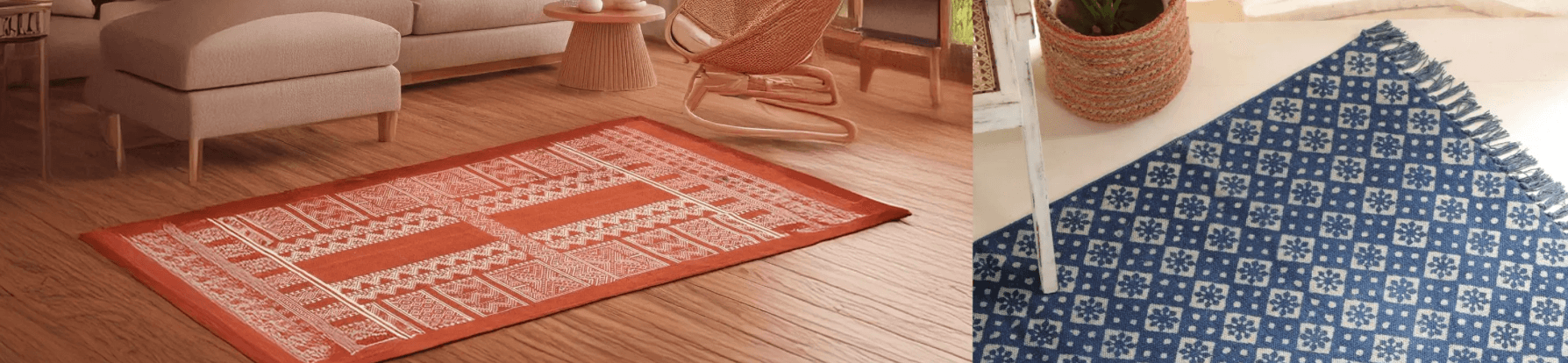
Handprinted Cotton Rug In Teal | Floor Rugs | Handmade In India - 3 x 5 Feet / Cotton / Teal

Cotton Rug for living room Hand Printed in Mandana Diamond Hut Design and Rust brown colour| Floor rug

Cotton Rug for living room hand printed in Jaipuri honey mustard design | Cotton | Floor rug

Clover Green Handwoven Rug In 4 x 6 ft | Geometric Pattern | Handcrafted In India - 4 x 6 ft / Jute & Wool / Green and Peach

Cotton Rug for living room or Bed room Hand Block printed in Green and Dusty Pink Colours with a Floral Design
You May also Like
Benefits of Choosing Eco-Friendly Home Decor
• By Anamika
• 2026-01-07
Why choose Handmade Products over Mass-Produced Products
• By Anamika
• 2026-01-07

Lippan Art vs Other Indian Wall Arts: Key Differences & Which Is Best for Your Home
• By Richa Kumari
• 2026-01-02
How to Choose the Right Lippan Art Size for Your Wall | Expert Sizing Guide
• By Richa Kumari
• 2026-01-02
How to Select the Right Bedsheet for Summer, Winter & Monsoon
• By Richa Kumari
• 2026-01-02
Frequently Asked Questions
1) Are jute rugs durable?
Yes, jute rugs are strong and long-lasting when used in dry indoor areas. Their tightly woven natural fibres can handle regular foot traffic, making them reliable for living rooms, bedrooms, and entryways.
2) Do jute rugs shed?
Minimal shedding is normal in the initial weeks, but it settles over time as the fibres compact naturally. Regular vacuuming keeps the surface smooth and helps the rug retain its clean, textured look.
3) How long do jute rugs last?
With proper care, a good jute rug can last 5-8 years or more. Keeping it away from moisture and rotating it occasionally helps maintain its strength and appearance for the long run.
4) Are jute rugs good for pets?
Jute rugs are good for pets as they are durable, easy to clean and have minimal shedding, and are safe from cat scratches.
 Free DeliveryAcross India
 100%Hand-crafted
 COD Available
 Easy Returns