




Block Printing Art: History, Process, Types & Hand Block Print Fabric
• By Anamika Choudhury
• 2025-12-24
• 15 mins read
Block printing is a traditional textile printing method where patterns are stamped onto fabric using hand-carved blocks dipped in dye. In simple terms, it is a process where design, colour and human skill come together to create repeated motifs on cloth, one block impression at a time. Unlike modern printing techniques that rely on screens or machines, block printing depends entirely on the steady hand and trained eye of the artisan.
What sets block printing apart from other textile printing methods is its tactile quality. Each print carries slight variations in colour, alignment and pressure, which is not a flaw but a defining feature. Screen printing and digital printing produce perfectly uniform results, while block printing celebrates irregularity and depth. This human touch is what gives block printed fabric its warmth, character and unmistakable identity.
History of Block Printing in India and the World
The history of block printing stretches back thousands of years, making it one of the oldest known textile decoration techniques. Early evidence of block printed fabrics has been found in India, China and Egypt, where artisans used carved stamps to apply patterns onto cloth. These early forms laid the foundation for what would later become a global craft tradition.
India played a crucial role in the evolution and spread of block printing. From as early as the 12th century, Indian block printed textiles were traded across Asia, the Middle East and Europe through maritime and land trade routes. These fabrics were prized for their rich colours, durability and intricate patterns. Over time, Indian artisans refined the technique, developed region-specific styles and preserved the craft even as industrial printing gained dominance elsewhere.
Block Printing in India: Regional Roots and Cultural Significance
India became the heart of block printing not by chance, but through a combination of climate, materials and community knowledge. The availability of cotton, natural dyes and skilled wood carvers allowed the craft to flourish across regions. Over generations, entire communities became custodians of this knowledge, passing techniques from parent to child.
Regions like Rajasthan, Gujarat Madhya Pradesh and Andhra Pradesh emerged as major centres of block printing. Each region developed its own visual language influenced by local culture, climate and lifestyle. In many villages, block printing was not just an occupation but a way of life. Fabrics created through this method were used for clothing, rituals, home furnishings and ceremonial occasions, making block printing deeply embedded in everyday Indian culture.
Hand Block Printing: Why This Craft Is Still Done by Hand?
Hand block printing continues to be practised manually because machines cannot replicate the sensitivity and judgement involved in the process.
Each print requires the artisan to make real-time decisions, such as:
- Precise visual alignment of the block on fabric
- Adjusting fabric tension to avoid smudging or distortion
- Controlling pressure so the print is even but not forced
These micro-decisions change with every impression. An experienced artisan makes them instinctively, something that cannot be pre-programmed into a machine. The rhythm of hand block printing is another reason it remains a human craft. The process follows a deliberate sequence:
- Separate blocks are used for outlines, colour fills, and fine details
- Each layer must dry and align perfectly with the previous one
- Timing and repetition build muscle memory over years of practice
This rhythm allows artisans to maintain consistency while embracing natural variation. The result is a fabric that feels alive rather than uniform. It is this balance between control and imperfection that gives hand block printed textiles their depth, character, and soul ensuring that no two pieces are ever exactly the same.
Block Printing Process Step by Step
Hand block printing begins with careful fabric preparation, which sets the foundation for a clean and lasting print.
- Natural fabrics such as cotton and silk are thoroughly washed
- Starch, oils and surface impurities are removed
- This ensures the dye absorbs evenly into the fabric
Once cleaned, the fabric is stretched flat across long printing tables. These tables are lightly padded to allow the wooden blocks to press evenly without damaging the weave.
The printing stage follows a precise yet intuitive method:
- The artisan dips the carved wooden block into dye
- The block is pressed firmly onto the fabric
- Alignment is done by eye, using visual reference points rather than measurements
After printing, the fabric is left to dry naturally. This step is essential before colour fixing begins.
The finishing process may include:
- Washing to remove excess dye
- Sun drying for natural colour setting
- Repeated washing or boiling, depending on the technique used
The final fabric carries layered colour, subtle texture and gentle variations, all of which reflect the unmistakable signature of handwork. No two pieces are ever identical, and that individuality is what defines hand block printed textiles.
Wooden Blocks in Block Printing: Carving, Preparation and Care
Wooden blocks are the backbone of block printing. Traditionally, blocks are carved from seasoned teak or sheesham wood because of their durability and resistance to moisture. The carving process itself is highly specialised, requiring precision and patience to ensure the design transfers cleanly onto fabric used for products such as block print cushion covers and other home textiles.
Once carved, blocks are soaked in oil to strengthen the wood and prevent cracking. Proper care ensures that a single block can last for decades, sometimes even generations. Artisans clean and dry blocks carefully after each use, understanding that the quality of the block directly affects the quality of the print seen in handcrafted block print cushion covers. These blocks are not just tools, but valuable craft assets passed down within families.
Natural and Vegetable Dyes Used in Block Printing
Traditional block printing relies heavily on natural and vegetable dyes derived from plants, minerals and organic matter. Indigo leaves produce deep blues, madder roots create rich reds, turmeric yields yellow tones, and iron-based solutions produce blacks and greys. These dyes interact with fabric differently from synthetic colours, creating softer transitions and depth.
Natural dyes are valued not only for their aesthetic appeal but also for how they age. Instead of fading harshly, colours mellow and develop character over time. This natural ageing process is one of the reasons block printed fabrics often look better with use, gaining richness rather than losing it.
Types of Block Printing in India
Block printing in India can be classified by region and technique. Each style reflects local culture, materials and artistic priorities.
Ajrakh Block Printing
Originating in Kutch, Ajrakh is known for its complex geometric patterns and deep indigo and red tones. The process involves multiple stages of resist printing and dyeing, making it one of the most intricate block printing styles in India.
Bagru Block Printing
Bagru printing from Rajasthan is characterised by earthy colours and bold floral motifs. It traditionally uses natural dyes and is closely linked to village life and everyday wear.
Sanganeri Block Printing
Sanganeri prints are lighter, more delicate and often feature fine floral patterns. They are usually printed on white or pastel backgrounds, making them visually softer than Bagru prints.
Bagh Block Printing
Bagh printing from Madhya Pradesh is known for its sharp patterns and deep red and black colours. The fabric is traditionally washed in the Baghini river, which contributes to its distinctive finish.
Kalamkari Block Printing
Though often associated with hand painting, Kalamkari also includes block printed styles. These prints narrate mythological stories and are rich in detail and symbolism.
Dabu Block Printing
Dabu is a mud-resist technique where designs are created using a clay paste that resists dye. This creates layered, textured patterns unique to the method.
Akola Block Printing
Akola prints from Maharashtra are recognised for their bold motifs and limited colour palette, often featuring black, red and white.
Kutch Block Printing
Distinct from Ajrakh, Kutch block printing includes a range of styles influenced by local tribes, featuring mirrors, geometrics and symbolic motifs.
What Is Block Print Fabric? Characteristics and Identification
Block print fabric is made using a hand block printing technique, where designs are stamped manually with carved wooden blocks. Once you know what to look for, these textiles are easy to recognise.
Key characteristics include:
- Subtle colour overlaps and soft edges
- Slight variations in motif placement
- A finish that reflects handmade execution, not machine precision
These are not flaws but signs of authenticity. Block print fabric often feels softer and more breathable, as natural dyes absorb into the fibres rather than sitting on the surface. Over time, the fabric develops a deeper, lived-in character that mass-produced prints cannot replicate.
Common Fabrics Used for Hand Block Printing
Cotton is the most widely used fabric for block printing because it absorbs dye well and allows patterns to appear crisp yet organic. It is commonly used for clothing, bedsheets, table linen and everyday textiles, including pieces like the Fine Cotton Block Printed Quilt used in bedrooms for year-round comfort.
Mulmul, a finer variety of cotton, is chosen when a lighter and more breathable fabric is required. Linen is preferred for home furnishings and garments where texture and durability matter. Silk is reserved for ceremonial or luxury pieces, where block printing adds depth without overpowering the fabric’s natural sheen.
How to Identify Authentic Hand Block Printed Fabric
Authentic hand block printed fabric can be identified through close observation and touch. Look for slight misalignments where patterns meet and gentle variations in colour density. The reverse side of the fabric often shows faint impressions of the dye, unlike digital prints which remain flat.
Touch the fabric to feel its texture. Hand printed cloth usually feels more breathable and natural. Pricing can also be an indicator. Authentic block printed textiles take time and labour, so prices reflect skilled craftsmanship rather than factory output. Knowing these signs helps buyers make informed choices and avoid imitation products.
Block Printing in Modern Homes and Contemporary Design
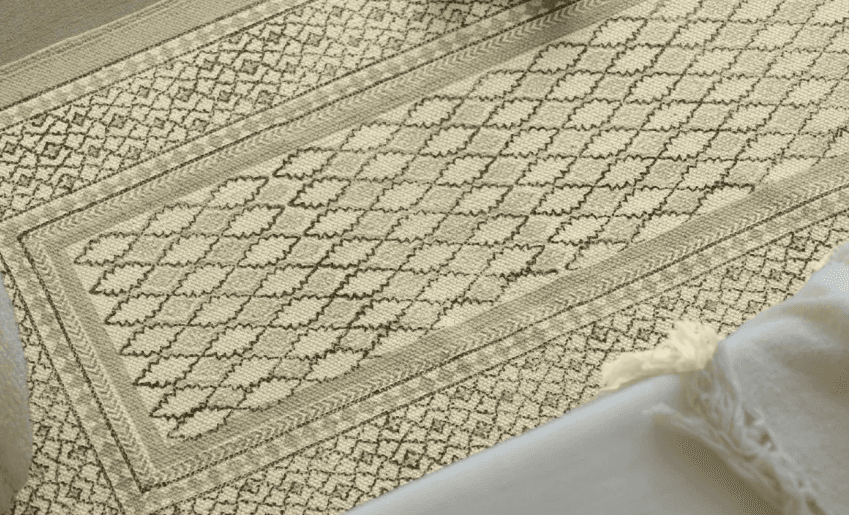
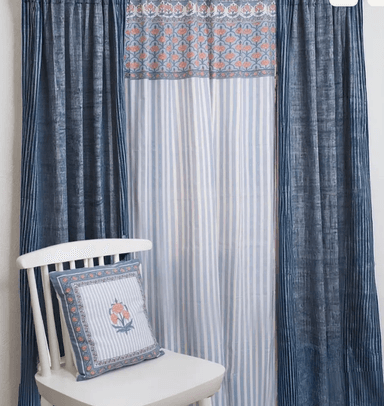
Today, block printing holds a strong place in contemporary design and everyday living. Designers use block printed fabrics for garments that pair traditional techniques with modern silhouettes. In homes, these prints appear across curtains, upholstery, bedsheets and table linen, as well as accents like the Pure Cotton Block Printed Rug in Ivory and Rust and the Geometric Block Printed Cushion Cover in Aqua and Off-White, adding warmth and individuality to interiors.
Block prints work especially well in modern homes because they soften clean, structured spaces with handcrafted texture. Neutral block prints complement minimal interiors, while bold regional patterns bring depth and character to more layered, eclectic settings. This balance between restraint and expression keeps block printing relevant across changing design preferences.
Challenges Faced by Hand Block Printing Artisans Today
Despite its cultural value, block printing faces significant challenges. Machine-made and digital prints imitate traditional designs at lower costs, making it difficult for artisans to compete. Rising material costs and unpredictable demand add further pressure.
Another concern is skill continuity. Younger generations often move away from the craft due to financial uncertainty. Without sustained support and fair pricing, centuries-old knowledge risks being lost. These challenges highlight the importance of conscious consumer choices.
Why Supporting Hand Block Printing Matters?
Supporting hand block printing goes beyond buying fabric. It helps preserve cultural heritage, sustain artisan livelihoods and keep traditional skills alive. Every purchase contributes to an ecosystem where craft knowledge is valued rather than replaced.
Choosing block printed textiles encourages ethical production and recognises the time and expertise involved in handmade work. It allows artisans to continue practising their craft with dignity and stability.
What Makes Block Printing So Unique?
What makes block printing truly unique is its embrace of imperfection. Each piece reflects the artisan’s hand, mood and rhythm at the time of creation. No two prints are exactly alike, even when made using the same block.
Block printing is not a static process. It evolves with use, ageing and wear, becoming richer over time. This living quality turns fabric into a record of human touch, making block printing not just a technique, but an ongoing dialogue between maker, material and user.
The Enduring Legacy of Block Printing
Block printing has survived centuries because it adapts without losing its essence. Rooted in tradition yet open to reinterpretation, it continues to speak to people who value authenticity and craftsmanship. In a world driven by speed and uniformity, block printing stands as a reminder that beauty often lies in patience, skill and the human hand.

Indigo Cotton Block Printed Rug In 3 x 5 ft | Geometric Print | Handcrafted In India - 3 x 5 ft / Cotton / Indigo

Cotton Rug Hand Block Printed in Ivory and Charcoal Colour | Soft Washable and Durable Carpet for Living Room or Bedroom

Cotton Rug for Living room or Bed room Hand Block printed in Blue and Dusty Pink Colours with a Floral Design

Cotton Door Curtain Set handwoven in Sage, Rust, Mustard and Teal Colours | Sheer and Solid Curtain Set| 7 Feet

Dining Table Runner in Cotton with Block Print Red| Eco Friendly Tableware Sustainably Crafted from Pure Cotton | Handmade In India - 13 x 72 inches / Pure Cotton / Red & Black

Dining Table Runner in Cotton with Block Print Blue | Eco Friendly Tableware Sustainably Crafted from Pure Cotton | Handmade In India - 13 x 72 inches / Pure Cotton / Indigo & Green
You May also Like
Benefits of Choosing Eco-Friendly Home Decor
• By Anamika
• 2026-01-07
Why choose Handmade Products over Mass-Produced Products
• By Anamika
• 2026-01-07
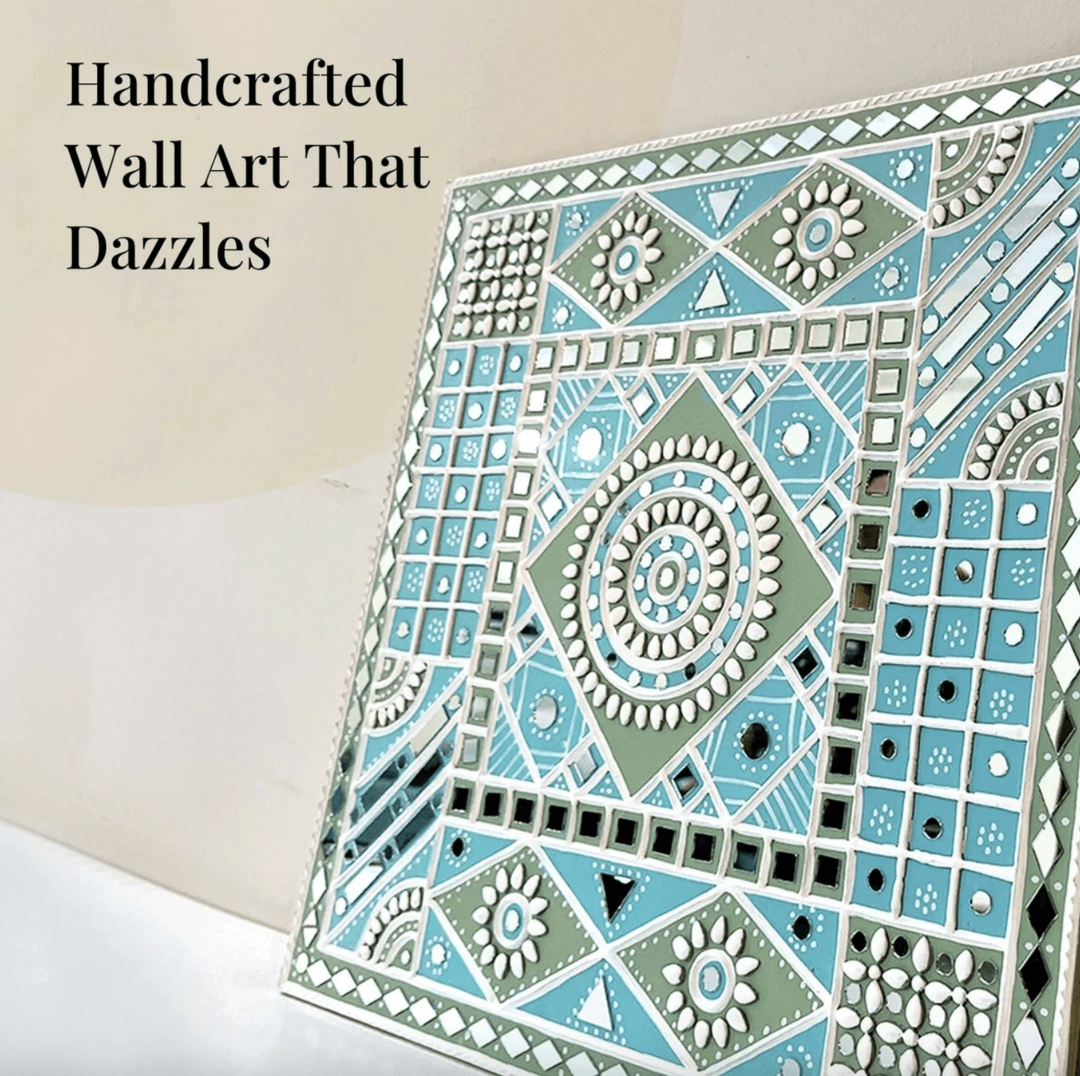
Lippan Art vs Other Indian Wall Arts: Key Differences & Which Is Best for Your Home
• By Richa Kumari
• 2026-01-02
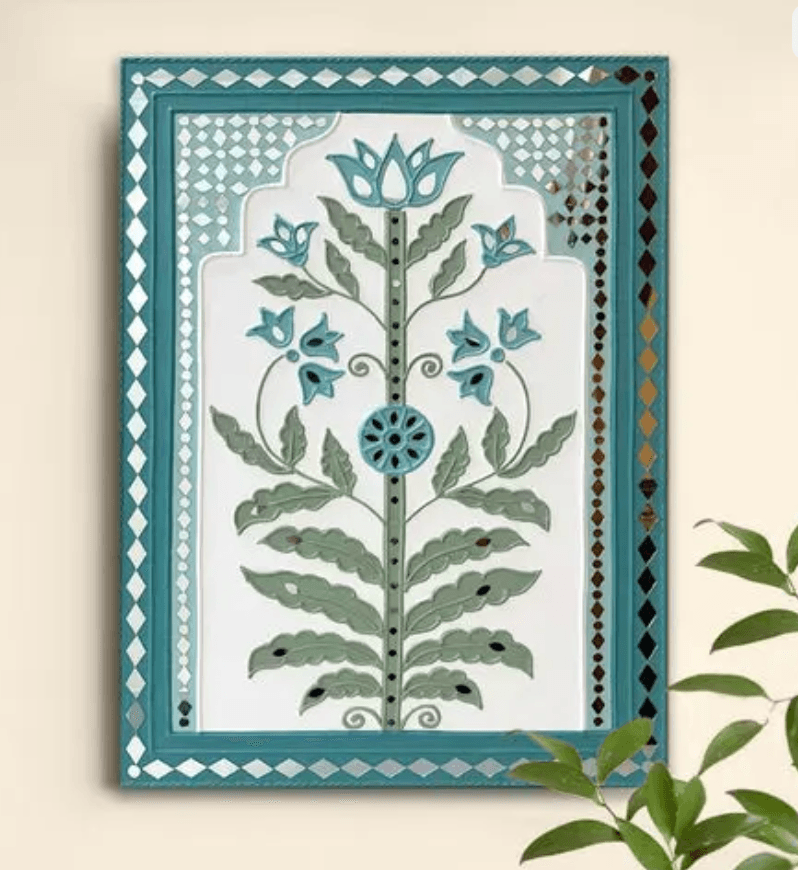
How to Choose the Right Lippan Art Size for Your Wall | Expert Sizing Guide
• By Richa Kumari
• 2026-01-02
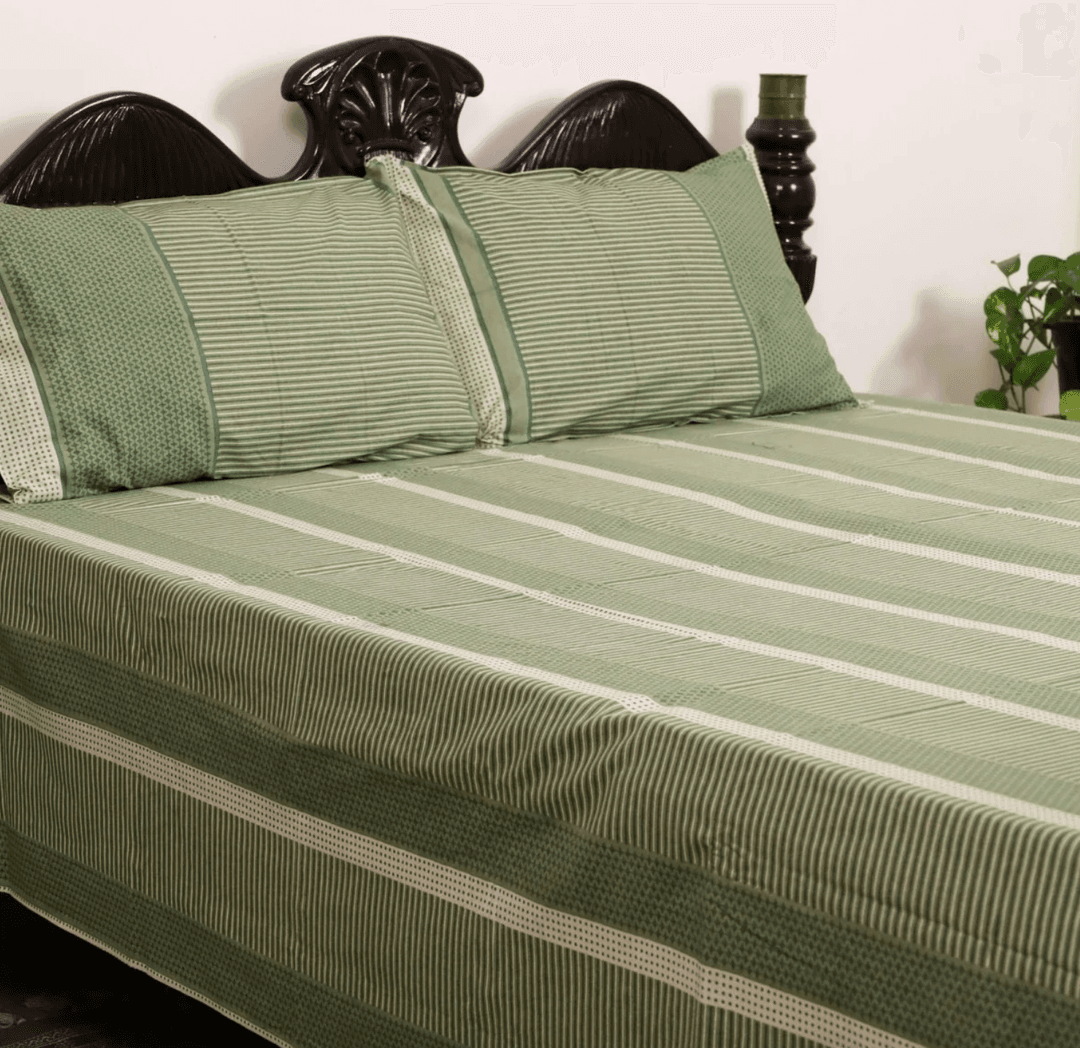
How to Select the Right Bedsheet for Summer, Winter & Monsoon
• By Richa Kumari
• 2026-01-02
Frequently Asked Questions
What is block printing in simple words?
Block printing is a fabric printing method where patterns are stamped by hand using carved wooden blocks.
Is block printing done only in India?
While block printing exists globally, India is one of the most important centres for preserving and evolving the craft.
How long does hand block printing take?
The process can take several days depending on fabric preparation, number of colours and drying time.
Does block printed fabric fade?
Natural dyes age gracefully and may soften over time rather than fade harshly.
Is block printing sustainable?
Yes. It uses human skill, minimal energy and often natural dyes, making it environmentally responsible.
 Free DeliveryAcross India
 100%Hand-crafted
 COD Available
 Easy Returns